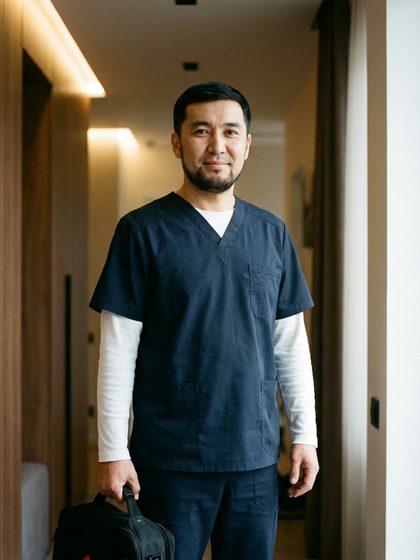
Reviewed bySerik Nurgaliev, MDAddiction physician, house calls, Makes house calls · updated 8 Nov 2026
Key facts
- Who comes
- A nurse experienced in intravenous procedures; if there is no prescription, a doctor comes first for an examination
- What they bring
- Single-use infusion sets and cannulas, sterile materials, antiseptics, blood pressure monitor, pulse oximeter, emergency kit
- How long it takes
- Usually from 40 minutes to 2 hours, depending on the volume of solution and the infusion rate
- When the nurse arrives
- About 60 minutes on average; scheduled drips as part of a course at a time agreed in advance
- When to call 103 immediately
- Chest pain, shortness of breath, loss of consciousness, seizures, swelling of the face and throat, bleeding, a sudden drop in blood pressure
- Documents
- ID, your doctor’s prescription or discharge summary, a list of the medicines you take, information about allergies
What you should know
An IV drip is a familiar procedure, but it deserves care: medicine goes directly into a vein, so it is important that it is prescribed for good reason and given sterilely and at the right rate. Having it at home is convenient, especially for older people, those with limited mobility, patients continuing treatment after discharge, and anyone who feels so unwell that the trip to a clinic seems impossible. A nurse in Khromtau comes with everything needed and stays with you until the procedure is over.
Let me explain how it works with us. If your own doctor has prescribed the drip, just show us the prescription. If there is no prescription, a DomVrach doctor comes first: they examine you, measure your blood pressure and pulse, find out what medicines you take and decide whether you need a drip at all and which one. Sometimes drinking fluids and taking tablets is enough, and then the doctor will tell you so honestly — nobody needs an unnecessary procedure.
When you may need an IV drip at home
- your doctor has prescribed a course of intravenous treatment, but traveling to appointments is difficult
- after hospital discharge, drips need to continue according to your doctor’s regimen
- dehydration after vomiting or diarrhea when you cannot drink on your own
- an elderly or bedridden relative needs infusions, but transporting them is difficult
- severe weakness after an infection, when the doctor sees an indication for an infusion after examining you
- toxicity with a high fever during a cold or flu, if the doctor decides it is needed
- a medicine needs to be given that is prescribed only as an intravenous drip
If several points apply, call a doctor. For chest pain, difficulty breathing, signs of stroke, seizures or loss of consciousness, call 103 or 112 immediately.
Why an IV drip is needed — and when you can do without it
A drip is needed when a medicine or fluid has to enter the bloodstream gradually and in a sufficient volume. The classic situation is dehydration from poisoning, when a person cannot drink because of vomiting. Drips are also prescribed for a course of treatment for certain conditions when the medicine exists only in a form for intravenous use. The decision about the composition and rate is always made by a doctor, taking into account body weight, blood pressure, and heart and kidney function.
It is important to understand that an IV drip does not “cleanse the body” and is not needed for every cold. According to WHO recommendations, for mild to moderate dehydration it is preferable to drink oral rehydration solutions in small sips. Intravenous administration carries risks — inflammation of the vein, allergic reactions, fluid overload in people with heart disease. That is why we set up a drip only when the benefit clearly outweighs the risk.
How an IV drip at home works
Step one: the call. Tell us who needs the drip, whether there is a doctor’s prescription and what the complaints are. Step two: the examination — the doctor or nurse measures blood pressure, pulse and temperature and asks about allergies. Step three: the nurse cleans the skin, inserts a cannula into a vein and connects the infusion set. Throughout the procedure she stays nearby and monitors how the patient feels. Afterwards she applies a pressure dressing to the puncture site and gives advice. Questions about how you feel the next day can be put to a doctor online.
Drips must not be given at home for conditions that require constant monitoring: severe heart failure, marked dehydration in young children, impaired consciousness, or a suspected surgical problem. The doctor will refer such a patient to hospital. If during or after the procedure you develop shortness of breath, chest pain, facial swelling, or a rash with difficulty breathing, call 103 or 112.
How we help
A drip prescribed by your own doctor
If you have a discharge summary or prescription, the nurse will carry out the procedure strictly according to it: the same medicine, dilution and rate. She will check the expiry date and the integrity of the packaging and compare the prescription with how the patient is feeling. If in doubt — for example, if blood pressure is too low — the procedure is postponed and a doctor contacts you to adjust it.
A drip after an examination by our doctor
If there is no prescription, a doctor comes first. They assess the patient’s condition and decide whether an infusion is indicated. Sometimes fluids and tablets are enough, sometimes a drip is needed, and sometimes hospital admission. This approach protects against unnecessary procedures and against a situation where the request for a drip hides an illness that needs different treatment.
A course of IV drips at home
When treatment is planned over several days, we draw up a convenient schedule of visits. Each time the nurse checks the condition of the vein, changes the insertion site if needed and reports any changes to the doctor. This way the full course can be completed at home without interruptions caused by travel difficulties or how the patient feels.
Monitoring and safety
During the procedure the nurse stays with the patient and monitors the infusion rate, blood pressure and pulse. The kit contains everything needed for emergency care in case of an allergic reaction. We take used needles and infusion sets away with us and dispose of them according to the rules. After the procedure the patient is advised to lie down for 15–20 minutes.
Myths and facts
MythA drip works faster than tablets for any illness
FactMost medicines work just as well in tablet form. A drip is needed when drinking is impossible, the medicine exists only for intravenous use, or fluids must be replaced quickly. In other cases it only adds risk.
MythYou can put up a drip yourself or ask a friend to do it
FactIntravenous administration requires sterility, the correct rate and readiness to help in case of an allergic reaction. Mistakes lead to vein inflammation, infection and serious complications, so the procedure is performed by a healthcare professional.
MythA drip “cleans the blood” and flushes out toxins
FactSolutions do not clean the blood: they replace fluid and deliver medicine. The liver and kidneys are responsible for eliminating substances, and a drip can only support them if a person is dehydrated.
How to call a doctor
- Call or message usWe answer 24/7: we'll ask about symptoms, age and chronic conditions and tell you which doctor you need. If an ambulance is needed, we'll say so straight away.
- Give us the addressHome, apartment, hotel or office. We'll tell you when the doctor will arrive — in the city, about 60 minutes on average.
- The doctor arrivesExamination, blood pressure, oxygen saturation, temperature and, if needed, an ECG, rapid tests and blood draw. The doctor explains the diagnosis and prescribes treatment.
- You get helpAn injection or IV drip if indicated, written advice, a sick note or certificate after the examination, and a follow-up call.
Prices in Khromtau
| IV drip at home (medication extra) | 12 000 ₸ |
| Intramuscular or intravenous injection | 4 000 ₸ |
| Vitamin IV drip | 16 000 ₸ |
| Phone advice | free |
The final cost is agreed before treatment starts. Prices are in tenge and do not constitute a public offer.
Where to get help
In khromtau you can get help at home, at one of our two addresses (8 Pushkina St., Khromtau, 125 Abylay khana St., Khromtau) or online if you need advice rather than an examination. We answer 24/7 and will suggest the best option.
Confidential and private
Information about your health is protected by medical confidentiality under the Code of the Republic of Kazakhstan “On Public Health and the Healthcare System”. We don't share it with employers, schools or third parties without your consent, except where expressly required by law.
Questions and answers
Can I get an IV drip without a doctor’s prescription?
We do not give drips “of your choice.” If there is no prescription, a doctor comes first, examines the patient and decides whether an infusion is needed. It takes a little time but protects against mistakes: sometimes weakness hides an illness that needs a completely different kind of help.
What should I prepare at home before the nurse arrives?
A checklist: a comfortable bed or sofa, good lighting, a chair nearby for the nurse, a hook or hanger to hang the bottle on, the doctor’s prescription and any medicines you have bought, if prescribed. Before the procedure, go to the toilet and drink a little water unless your doctor has told you not to.
Does it hurt to have a drip put in?
You will only feel a brief prick when the cannula is inserted into the vein. After that the solution flows in painlessly. If you feel burning, swelling or redness at the insertion site, tell the nurse right away: she will check the cannula and, if necessary, move it to another vein.
Can an elderly person have IV drips at home?
Yes, this is a common situation in Khromtau. The nurse takes the fragility of the veins into account and monitors blood pressure and the infusion rate, while the doctor assesses heart and kidney function in advance. If an elderly person has marked shortness of breath, swelling or confusion, hospital treatment is safer.
How long does an IV drip take?
The time depends on the volume of solution and the prescribed rate — usually from 40 minutes to two hours. The infusion must not be sped up, even if you want to finish sooner: an infusion that runs too fast can overload the heart or cause a headache or a reaction to the medicine.
What should I do if I feel unwell after a drip?
If you feel mild weakness or dizziness, lie down, drink some water and call us. If you develop a rash with facial swelling, difficulty breathing, chest pain or loss of consciousness, call 103 or 112 immediately. Tell the ambulance crew which medicine was given.
Where do doctors visit in Khromtau and where are the branches?
Home visits cover all city districts and nearby settlements, 24/7. Appointments at two branches: 8 Pushkina St., Khromtau and 125 Abylay khana St., Khromtau. Phone in Khromtau: +7 (700) 309-38-25.
Sources and methodology
This page was prepared by the DomVrach medical editorial team based on:
- Clinical diagnosis and treatment protocols of the Ministry of Health of the Republic of Kazakhstan
- Code of the Republic of Kazakhstan “On Public Health and the Healthcare System”
- International Classification of Diseases ICD-10, World Health Organization
- WHO recommendations on primary health care
- NICE (UK) guidelines on managing acute and chronic conditions in primary care
This information is for reference only and does not replace a consultation with a specialist. Editorial policy