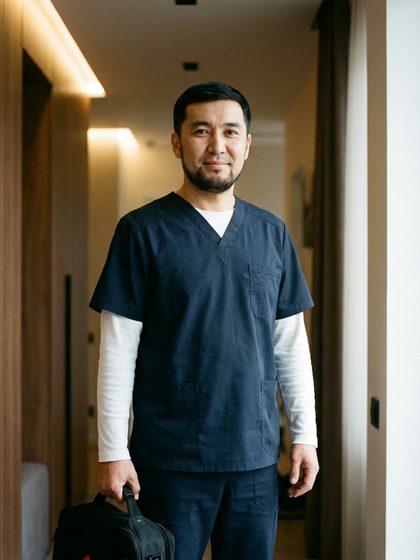
Reviewed bySerik Nurgaliev, MDAddiction physician, house calls, Makes house calls · updated 8 Nov 2026
Key facts
- Who comes
- An addiction physician, accompanied by a nurse if needed; the team arrives in an unmarked vehicle
- What they bring
- Blood pressure monitor, pulse oximeter, glucose meter, portable ECG, IV sets, solutions, and medications
- How long it takes
- Examination and conversation take 20–30 minutes; with an IV drip, usually 1.5–3 hours
- Confidentiality
- You do not have to give a surname; no entry on the registry; medical confidentiality under Kazakhstan law
- Call 103 urgently if
- Seizures, hallucinations, loss of consciousness, chest pain, vomiting blood, or a suspected overdose
- Outcome
- A stabilized condition, a clear plan for the next few days, and options for further treatment
What you should know
If you are reading this at night because someone close to you feels terrible after several days of drinking, let’s take it step by step and stay calm. The DomVrach addiction physician makes home visits in Turkistan around the clock, usually within about an hour inside city limits. The doctor will not lecture or shame anyone: the job is to understand how dangerous the situation is right now, relieve the most severe symptoms, and decide together with you what to do tomorrow. Everything is confidential, with no record sent to the local clinic where the patient is registered.
While you wait for the doctor, do a few simple things. Put any remaining alcohol out of sight and do not offer a “hair of the dog” drink. Offer water in small sips if there is no vomiting. If the person is drowsy, lay them on their side so they cannot choke if they vomit. Do not give sleeping pills or sedatives from the home medicine cabinet: combined with alcohol, they can suppress breathing. Find the medicines the person takes regularly and try to remember how many days the drinking has lasted.
When to Call an Addiction Physician: Reasons for a Home Visit
- a drinking binge has lasted several days and the person cannot stop on their own
- severe hand tremors, sweating, nausea, and insomnia after stopping alcohol
- high blood pressure, a racing heart, and anxiety during a hangover
- the person is elderly or has heart disease, liver disease, or diabetes
- family members want to understand how to talk to their loved one about addiction treatment
- you need advice about alcohol aversion therapy (“coding,” a treatment widely used in Kazakhstan and CIS countries) or rehab without going to a clinic
- severe body aches and anxiety have appeared after stopping alcohol or other substances
If several points apply, call a doctor — visits are confidential and nothing is registered. For hallucinations, seizures, chest pain, vomiting blood, loss of consciousness, suicidal thoughts or any threat to life, call 103 or 112 immediately.
Why Coming Off a Drinking Binge Without a Doctor Can Be Dangerous
When someone drinks for several days in a row, the body adapts: the nervous system gets used to alcohol, while the liver, heart, and kidneys work at their limit. Stopping abruptly triggers withdrawal, with tremors, blood pressure spikes, insomnia, and anxiety. In some people, withdrawal progresses to seizures or alcohol withdrawal delirium, commonly known as delirium tremens or “the DTs.” This is hard to predict in advance, which is why a doctor’s assessment during the first 24 hours is especially important.
The danger is greater with chronic illnesses, older age, poor eating during the binge, and dehydration. Home “remedies” such as another drink, strong coffee, or a handful of blood pressure pills and sleeping tablets often only make things worse. The addiction physician evaluates the whole body, including blood pressure, heart rhythm, blood sugar, and signs of liver damage, and chooses care that is safe for this particular person.
How a Home Visit Works, Step by Step
Step one: you call, and the dispatcher asks a few questions about the person’s condition, how long the drinking has lasted, and any illnesses. Step two: the doctor arrives at your address in Turkistan, introduces themselves, asks for the patient’s consent, and performs an examination, checking blood pressure, pulse, oxygen saturation, and blood sugar, plus an ECG if indicated. Step three: an IV drip is set up or injections are given. Step four: the doctor gives written recommendations. Before the visit you can get a brief consultation online, and afterward you can ask follow-up questions by phone.
Home care is not always the right choice. If the person has seizures, hallucinations, confusion, chest pain, vomiting blood, or signs of an overdose, call 103 or 112 immediately instead of waiting for the addiction physician. The doctor may also recommend hospital care for severe heart or liver disease, a history of seizures, or a very long binge. An adult is treated only with their own consent: the team will not take anyone away by force.
How we help
Examination and risk assessment
We start with the most important question: is it safe to stay at home? The doctor measures blood pressure, pulse, oxygen saturation, and blood sugar, assesses tremors, sweating, and orientation to time and place, and records an ECG if needed. They ask about previous binges, seizures, and chronic illnesses. At the end you get an honest answer: whether help at home is possible or a hospital stay would be better.
IV drip and detoxification
If the person’s condition allows, the nurse or doctor sets up an IV drip. It contains detoxification solutions to replace lost fluids, B vitamins to protect the nervous system, liver-support medicines, and medications to support the heart. The doctor chooses the exact composition based on the examination, and sedatives are used only when the doctor prescribes them. Most people feel noticeably better while the drip is still running.
Talking about next steps
An IV drip relieves the acute condition, but it does not treat the addiction itself. So once the patient feels better, the doctor calmly discusses with them and their family what comes next: follow-up care, alcohol aversion therapy (“coding”), psychotherapy, or a rehab program. No one is pushed to decide right away. What matters is that the person understands that help is available and there is no shame in seeking it.
Recommendations for the next few days
Before leaving, the doctor gives you a written guide: how much water to drink, what to eat, how to sleep, which of the prescribed medicines to take and when, and which medicines from the home cabinet are best left alone. The doctor will also explain the warning signs that mean you should call 103. Family members will learn how to watch over the person during the first night and when to contact the DomVrach service again.
Myths and facts
MythAn addiction physician will always put you on the registry
FactPaid confidential care at home does not mean registration with the state narcology dispensary. Information about the patient is protected by medical confidentiality under the Code of the Republic of Kazakhstan “On Public Health and the Healthcare System,” and it can be disclosed only in cases expressly provided for by law.
MythJust have another drink and it will pass
FactA “hair of the dog” drink briefly eases tremors and anxiety, but it prolongs the binge and postpones withdrawal, making it more severe. Every extra day of drinking adds strain on the heart and liver. It is safer to stop drinking under a doctor’s supervision.
MythA doctor can treat a person without their consent
FactAn adult is treated only with their voluntary consent. Involuntary measures are possible only by court decision, following the procedure established by Kazakhstan law. The addiction physician’s role at home is to help and motivate, not to force.
How to call a doctor
- Call or message usWe answer 24/7: we'll ask about symptoms, age and chronic conditions and tell you which doctor you need. If an ambulance is needed, we'll say so straight away.
- Give us the addressHome, apartment, hotel or office. We'll tell you when the doctor will arrive — in the city, about 60 minutes on average.
- The doctor arrivesExamination, blood pressure, oxygen saturation, temperature and, if needed, an ECG, rapid tests and blood draw. The doctor explains the diagnosis and prescribes treatment.
- You get helpAn injection or IV drip if indicated, written advice, a sick note or certificate after the examination, and a follow-up call.
Prices in Turkistan
| Addiction doctor home visit | 18 000 ₸ |
| Alcohol detox at home (IV drip, basic) | 22 500 ₸ |
| Hangover IV drip | 18 000 ₸ |
| Repeat IV drip | 16 000 ₸ |
| Phone advice | free |
The final cost is agreed before treatment starts. Prices are in tenge and do not constitute a public offer.
Where to get help
In turkistan you can get help at home, at one of our two addresses (66 Tauelsizdik Ave., office 30, Turkistan, 94 Rabigi Sultan Begim St., office 11, Turkistan) or online if you need advice rather than an examination. We answer 24/7 and will suggest the best option.
Confidential and private
Information about your health is protected by medical confidentiality under the Code of the Republic of Kazakhstan “On Public Health and the Healthcare System”. We don't share it with employers, schools or third parties without your consent, except where expressly required by law.
Questions and answers
Can I call an addiction physician if the person is against it?
The doctor can come and talk, but they have no right to treat an adult without consent. Often a calm conversation is enough: a person who feels unwell will agree to at least an IV drip. If they refuse and the situation is dangerous, with seizures, delirium, or loss of consciousness, call 103 or 112.
How quickly will the addiction physician arrive?
The service works around the clock, and within city limits the doctor usually arrives in about 60 minutes. The exact time depends on how far away the address is and on traffic. If the person’s condition suddenly gets worse while you are waiting, do not wait: call an ambulance on 103.
Will my employer find out about the visit?
No. The visit is confidential, you do not have to give a surname, and the doctor is bound by medical confidentiality. The team arrives in an unmarked vehicle. Certificates and other documents are issued only at your request and in accordance with Kazakhstan law.
What should I prepare before the doctor arrives?
A short checklist: a list of the medicines the person takes regularly; information about chronic illnesses and allergies; roughly how long the binge has lasted; a comfortable place where they can lie down for 1.5–2 hours; a free power outlet and good lighting. If you have discharge summaries from previous hospital stays, keep them at hand.
Can an addiction physician visit an elderly person?
Yes, but in older patients the doctor pays particular attention to the heart, blood pressure, and blood sugar, and the IV drip is formulated more gently. If the person has severe heart disease or has had seizures during previous withdrawals, the doctor may recommend observation in a hospital, purely for safety.
How many visits will be needed?
After a short binge, one visit is usually enough. After prolonged drinking, the doctor may suggest coming back the next day to reassess the person and, if needed, set up another IV drip. The decision is made together with you based on the examination in Turkistan.
Where do doctors visit in Turkistan and where are the branches?
Home visits cover all city districts and nearby settlements, 24/7. Appointments at two branches: 66 Tauelsizdik Ave., office 30, Turkistan and 94 Rabigi Sultan Begim St., office 11, Turkistan. Phone in Turkistan: +7 (700) 309-38-25.
Sources and methodology
This page was prepared by the DomVrach medical editorial team based on:
- Clinical diagnosis and treatment protocols of the Ministry of Health of the Republic of Kazakhstan
- Code of the Republic of Kazakhstan “On Public Health and the Healthcare System”
- International Classification of Diseases ICD-10, World Health Organization
- WHO recommendations on primary health care
- NICE (UK) guidelines on managing acute and chronic conditions in primary care
This information is for reference only and does not replace a consultation with a specialist. Editorial policy