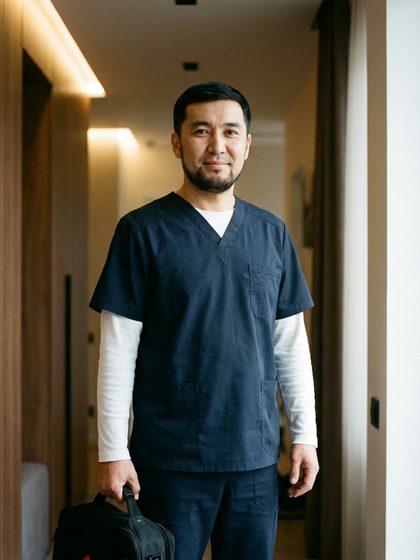
Reviewed bySerik Nurgaliev, MDAddiction physician, house calls, Makes house calls · updated 8 Nov 2026
Key facts
- Who comes
- An addiction physician, together with a nurse when needed to set up an IV drip and monitor the patient
- What they bring
- A blood pressure monitor, glucose meter, pulse oximeter, infusion solutions, single-use IV sets and medications as clinically indicated
- How long it takes
- The exam takes 20–40 minutes; if an IV drip is given, usually another 1–2 hours under observation
- Confidentiality
- Paid confidential care with no entry in the state dispensary registry; medical confidentiality is protected by the Code of the Republic of Kazakhstan “On Public Health and the Healthcare System”
- When to call 103 right away
- Hallucinations, seizures, chest pain, vomiting blood, loss of consciousness, suspected overdose
- Outcome
- An assessment of the patient’s condition, help on the spot, advice for the next few days and a plan for further treatment
What you should know
If you logged every call to an addiction physician in Almaty over a year, you would end up with something close to a calendar. December and January bring office parties and long holidays, after which relatives call: “It’s the third day and he can’t stop.” Summer brings heat, when alcohol on top of dehydration hits much harder and blood pressure swings. The reason for the call is almost always the same: the person feels terrible, they will not or cannot go to a hospital, and the family has no idea how serious things really are.
The job of an addiction physician on a home visit is to figure things out on the spot. The doctor examines the patient, measures blood pressure, pulse, oxygen saturation and blood sugar, and asks what was used and for how many days, what chronic conditions the person has, and what medications they take. Then comes the decision: can the person be helped safely at home with an IV drip and monitoring, or do the signs point to a need for hospital care? We do not push anyone into treatment “at any cost” and we do not promise miracles — we assess the risks and talk about them honestly.
When to Call an Addiction Physician to Your Home
- a drinking binge has lasted more than two or three days and the person cannot stop on their own
- after stopping alcohol, shaking, sweating, anxiety and insomnia have appeared
- a severe hangover with vomiting, weakness and blood pressure swings
- an elderly person or a patient with heart disease or diabetes has started drinking
- relatives do not understand how dangerous their loved one’s condition is
- you need advice on addiction treatment without going to a clinic
- it is important to stay confidential and avoid the state dispensary
If several points apply, call a doctor — visits are confidential and nothing is registered. For hallucinations, seizures, chest pain, vomiting blood, loss of consciousness, suicidal thoughts or any threat to life, call 103 or 112 immediately.
Why People Call an Addiction Physician Home Instead of Going to a Clinic
Most often the reason is simple: the person is in such a state that going anywhere is physically hard and morally embarrassing. In evening traffic on Abay or Al-Farabi Avenue, the drive to a clinic can take more than an hour, and you cannot put a patient with tremors and nausea in a taxi. At home they are calmer, and it is easier to agree on treatment with them. For the family, it also matters that neighbors and colleagues will not find out: the doctor arrives with no identifying markings.
The second reason is fear of being registered. Many people remember the days when seeing an addiction physician meant an entry in the dispensary registry and problems with a driver’s license or a job. Today, paid confidential care is provided without registering the patient with the dispensary, and information about the patient is a medical secret under the Code of the Republic of Kazakhstan “On Public Health and the Healthcare System.” It can be disclosed only in cases expressly provided for by law. This removes the main barrier, and people seek help earlier, while the situation can still be fixed at home.
How an Addiction Physician Home Visit Works
First comes a short phone conversation: the operator and the doctor ask about the person’s age, how many days the drinking or substance use has been going on, whether there are chronic illnesses, whether the person is conscious and whether they agree to receive help. Then the doctor sets off. On site there is an examination: blood pressure, pulse, oxygen saturation, blood sugar and a neurological assessment. If indicated, an IV drip with detoxification solutions and B vitamins is given. At the end, the doctor explains what to do over the next 24 hours and arranges a follow-up contact online.
Not everyone can be helped at home. If the person is confused, hallucinating, having seizures, chest pain, vomiting blood, very high blood pressure, or there is a suspicion of poisoning with counterfeit alcohol, hospital care is needed — the doctor will call 103 and wait for the ambulance crew. Home treatment is never given without the consent of an adult patient: if they refuse, the addiction physician will talk with the family and explain the legal options. A medical team cannot “take a person away” by force.
How we help
Examination and risk assessment
The addiction physician finds out how long the drinking or use has lasted, whether there have been episodes of seizures or delirium tremens in the past, and what medications the person takes. They measure blood pressure, pulse, oxygen saturation and blood sugar, and assess consciousness and coordination. Based on the results, the doctor decides whether it is safe to treat the person at home and explains in detail to the patient and their family what to watch for over the next few days.
IV drip and detoxification
For a drinking binge or a severe hangover, an infusion is given: detoxification solutions to replace fluids and salts, B vitamins and, if indicated, liver-protecting medications and drugs that support the nervous system. The doctor chooses the composition based on the state of the patient’s heart, blood pressure and liver. While the solution is running, the nurse or doctor watches the patient and adjusts the drip rate if needed.
Withdrawal treatment
If tremors, sweating, anxiety or insomnia appear after stopping alcohol, the doctor prescribes treatment that eases withdrawal symptoms and lowers the risk of complications. Sedatives and sleeping pills are used only when prescribed by a doctor, taking into account how they interact with alcohol. Trying to “knock out” withdrawal on your own with pills from the home medicine cabinet is dangerous.
Consultation and treatment plan
Once the acute condition has been relieved, there is a chance to talk about what comes next: whether psychotherapy, alcohol aversion therapy (“coding”), rehabilitation or treatment of other illnesses is needed. The addiction physician explains the options without pressure, taking into account how ready the patient is. Family members get advice on how to support the person without slipping into codependency, and follow-up online consultations are offered.
Myths and facts
MythAn addiction physician home visit means an instant entry in the dispensary registry
FactPaid confidential care is provided without registering the patient with the state dispensary. Information about the patient is protected by medical confidentiality under the Code of the Republic of Kazakhstan “On Public Health and the Healthcare System,” and it can be disclosed only in cases expressly provided for by law.
MythAn IV drip will “flush it all out” and the addiction will go away
FactAn IV drip relieves intoxication and makes the person feel better, but it does not treat addiction. To avoid going back to binge drinking a week later, the person needs to make their own decision, have support from loved ones and continue working with an addiction physician or psychotherapist.
MythRelatives can call a doctor and have the person treated without their consent
FactWithout the consent of an adult patient, alcohol detox and alcohol aversion therapy (“coding”) are not carried out. Involuntary hospitalization is possible only under the procedure established by the law of the Republic of Kazakhstan, by court decision. The doctor will help the family understand what can be done legally.
How to call a doctor
- Call or message usWe answer 24/7: we'll ask about symptoms, age and chronic conditions and tell you which doctor you need. If an ambulance is needed, we'll say so straight away.
- Give us the addressHome, apartment, hotel or office. We'll tell you when the doctor will arrive — in the city, about 60 minutes on average.
- The doctor arrivesExamination, blood pressure, oxygen saturation, temperature and, if needed, an ECG, rapid tests and blood draw. The doctor explains the diagnosis and prescribes treatment.
- You get helpAn injection or IV drip if indicated, written advice, a sick note or certificate after the examination, and a follow-up call.
Prices in Almaty
| Addiction doctor home visit | 20 000 ₸ |
| Alcohol detox at home (IV drip, basic) | 25 000 ₸ |
| Hangover IV drip | 20 000 ₸ |
| Repeat IV drip | 18 000 ₸ |
| Phone advice | free |
The final cost is agreed before treatment starts. Prices are in tenge and do not constitute a public offer.
Where to get help
DomVrach in Almaty: a doctor comes to your home in about 60 minutes on average (all city districts and nearby settlements). Two addresses for appointments and procedures — 1B Issykskaya St., Almaty and 71 Rayymbeka Ave., office 12, Almaty. We also visit tourists in hotels and companies in their offices.
Confidential and private
in Almaty the doctor comes at a convenient time, including to your hotel or office. Treatment documents are given only to the patient or their legal representative.
Questions and answers
How quickly will the addiction physician arrive?
On average, in about 60 minutes anywhere in Almaty. During rush hour, especially when heading out of the center toward Nauryzbay or Alatau district, it may take longer; the operator will give you an estimate when you call. We also travel to Talgar, Kaskelen, Boralday and Otegen Batyr; the arrival time depends on the roads.
Does the patient have to consent?
Yes. An adult decides for themselves whether to receive treatment. Relatives can call the doctor, but the addiction physician gives an IV drip or any other treatment only with the patient’s consent. If the person refuses, the doctor will talk with the family and explain which legal steps are possible.
Can I call an addiction physician confidentially?
Yes. You do not have to give your surname, and the DomVrach doctor arrives in ordinary clothes with no identifying markings. Paid confidential care does not mean being placed on a registry, and information about the patient is a medical secret under the laws of the Republic of Kazakhstan.
What should I prepare before the doctor arrives?
A list of the medications the person takes, information about chronic illnesses and allergies, and the approximate time they last drank alcohol. Air out the room, put any alcohol out of reach, and do not give sedative pills “to calm them down” before the examination.
When will the addiction physician send the patient to hospital?
If there are signs of delirium tremens, seizures, impaired consciousness, chest pain, vomiting blood, suspected poisoning with counterfeit alcohol or an overdose. In these cases the doctor calls 103 and stays with the patient until the ambulance crew arrives.
Can I get “coded” right away on the first visit?
Usually not. Alcohol aversion therapy (“coding”) requires the person to stay sober for a period set by the doctor and to give informed consent. On the first visit, the addiction physician relieves the acute condition and discusses coding later, when the person can make the decision calmly.
Where do doctors visit in Almaty and where are the branches?
Home visits cover all city districts and nearby settlements, 24/7. Appointments at two branches: 1B Issykskaya St., Almaty and 71 Rayymbeka Ave., office 12, Almaty. Phone in Almaty: +7 (700) 309-38-25.
Sources and methodology
This page was prepared by the DomVrach medical editorial team based on:
- Clinical diagnosis and treatment protocols of the Ministry of Health of the Republic of Kazakhstan
- Code of the Republic of Kazakhstan “On Public Health and the Healthcare System”
- International Classification of Diseases ICD-10, World Health Organization
- WHO recommendations on primary health care
- NICE (UK) guidelines on managing acute and chronic conditions in primary care
This information is for reference only and does not replace a consultation with a specialist. Editorial policy