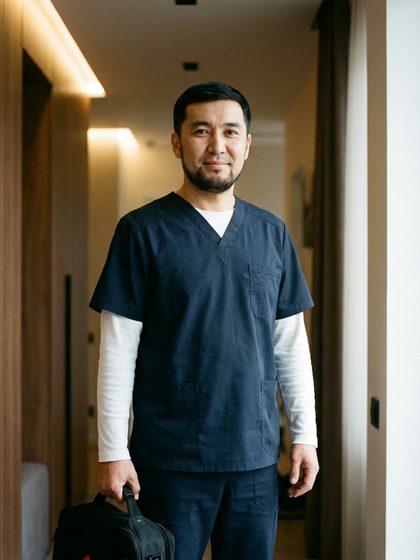
Reviewed bySerik Nurgaliev, MDAddiction physician, house calls, Makes house calls · updated 8 Nov 2026
Key facts
- Who comes
- An addiction physician, with a nurse if needed; the team arrives in an unmarked vehicle
- What they bring
- Blood pressure monitor, pulse oximeter, glucose meter, portable ECG, IV solutions, and medications for symptom relief
- How long it takes
- The first visit usually takes 2–3 hours; follow-up checks over several days are often needed
- Confidentiality
- No documents or surname required, no entry on the registry; medical confidentiality under Kazakhstan law
- Call 103 urgently if
- Seizures, delirium, hallucinations, slow breathing, loss of consciousness, or a suspected overdose
- Outcome
- Relief from pain, anxiety, and insomnia, a risk assessment, and a treatment and rehab plan
What you should know
Withdrawal is one of the hardest things a person with an addiction goes through. Muscles and joints ache, sleep will not come, hot flashes alternate with chills, and the anxiety feels unbearable. It is important to know that this state does pass, and with a doctor’s help it can be much easier to get through. The DomVrach addiction physician comes to your home in Semey without unnecessary questions about who and why, and focuses on one thing: making the person safer and more comfortable.
What to do while you wait for the doctor. Stay close, and speak calmly and briefly. Offer water or warm tea, and a warm blanket if the person has chills. Do not give them any substances “to take the edge off,” and do not use sleeping pills or strong painkillers from the home medicine cabinet: mixing drugs is dangerous. If the person is very drowsy, breathing slowly, or hard to wake, this may be an overdose, so call 103 or 112 right away.
When to Call a Doctor for Withdrawal Symptoms
- body aches, chills, and sweating have started after stopping a substance
- several nights in a row without sleep, with severe anxiety and irritability
- nausea, diarrhea, stomach pain, and loss of appetite
- a pounding heart, blood pressure spikes, tremors, and muscle twitching
- the person wants to stop using but is afraid of severe withdrawal
- family members can see their loved one is suffering and do not know how to help
- stopping sleeping pills or sedatives after long-term use has been difficult
If several points apply, call a doctor — visits are confidential and nothing is registered. For hallucinations, seizures, chest pain, vomiting blood, loss of consciousness, suicidal thoughts or any threat to life, call 103 or 112 immediately.
Why Withdrawal Syndrome Develops
When a person uses a substance that affects the brain for a long time, such as alcohol, opioids, or certain sedatives, the nervous system adapts to it. The receptors and systems that control pain, sleep, mood, and blood pressure start to work differently. If the substance is suddenly no longer coming in, this new balance is thrown off: pain, anxiety, insomnia, chills, and digestive problems appear. This is what is called withdrawal, or being “dope sick.”
How severe withdrawal is depends on the substance, how long it was used, the person’s general health, and whether there have been severe episodes before. Some types of withdrawal are life-threatening in themselves: for example, stopping alcohol or sleeping medications can cause seizures and delirium. That is why the condition should be assessed and treatment chosen by a doctor, not by an online forum or advice from friends.
How Withdrawal Treatment at Home Works, Step by Step
Step by step: the doctor introduces themselves, obtains the patient’s consent, and calmly asks what was used and for how long, when the last dose was, and whether there are any medical conditions. Then comes the examination: blood pressure, pulse, breathing, oxygen saturation, and an ECG if needed. Next the doctor sets up an IV drip and gives medications as indicated, watching how the person responds. Before leaving, they give recommendations and agree on the next contact. Some questions can be discussed with the doctor by phone before and after the visit.
Home treatment is not always possible. For seizures, delirium, hallucinations, depressed breathing, a suspected overdose, suicidal thoughts, or a threat to the person or others, call 103 or 112. If the person has serious medical conditions or past withdrawals involved complications, the doctor will suggest hospital care. Hospitalization of an adult is voluntary, except in cases established by Kazakhstan law.
How we help
Assessing the condition and risks
First of all, the doctor works out how dangerous this particular withdrawal is. They take into account the substance, the timeline, past amounts used, other medical conditions, and previous episodes. It is important to tell the doctor the truth: they do not report it to the police or put anyone on the registry. The more accurate the information, the safer the treatment. At the end, the doctor will explain whether care can continue at home.
Symptom relief
The doctor eases the main symptoms of withdrawal: replacing fluids with detoxification solutions, reducing nausea, and supporting the heart and nervous system with B vitamins. For anxiety, insomnia, and pain, medications are used only as prescribed by the doctor, with the risk of drug interactions taken into account. The goal is not to “knock the person out” but to help them get through the hardest days calmly.
Monitoring over the following days
Withdrawal rarely passes in a single day. The doctor usually arranges follow-up visits or calls to adjust treatment. Family members are told what to watch for: breathing, sleep, temperature, and behavior. If confusion or seizures appear, call 103 without waiting for the scheduled visit.
The path to addiction treatment
Treating withdrawal is the first step. After that, treating the addiction itself is what matters: consultations with an addiction physician, psychotherapy, rehab programs, and work with the family. The DomVrach doctor will explain which options are available in Semey and help you choose the right one. The decision always rests with the patient, and the doctor’s role is to support and advise.
Myths and facts
MythYou can just tough out withdrawal; there is no need for a doctor
FactSome types of withdrawal really do pass without complications, but stopping alcohol or sedatives can cause seizures and delirium, and severe pain and insomnia often lead to relapse. A doctor’s help makes this period safer and easier.
MythIf the doctor finds out I used drugs, they will report me to the police
FactAn addiction physician observes medical confidentiality under the Code of the Republic of Kazakhstan “On Public Health and the Healthcare System.” Paid confidential care does not lead to registration on the state registry, and information is disclosed only in cases expressly provided for by law.
MythUsing a little of the substance is the safest way to ease withdrawal
FactAfter a break, the body’s tolerance changes, and the usual amount can cause a dangerous overdose. This is one of the most common causes of severe poisoning. It is safer to see a doctor who can relieve the symptoms with medical treatment.
How to call a doctor
- Call or message usWe answer 24/7: we'll ask about symptoms, age and chronic conditions and tell you which doctor you need. If an ambulance is needed, we'll say so straight away.
- Give us the addressHome, apartment, hotel or office. We'll tell you when the doctor will arrive — in the city, about 60 minutes on average.
- The doctor arrivesExamination, blood pressure, oxygen saturation, temperature and, if needed, an ECG, rapid tests and blood draw. The doctor explains the diagnosis and prescribes treatment.
- You get helpAn injection or IV drip if indicated, written advice, a sick note or certificate after the examination, and a follow-up call.
Prices in Semey
| Alcohol detox at home (IV drip, basic) | 22 500 ₸ |
| Addiction doctor home visit | 18 000 ₸ |
| Hangover IV drip | 18 000 ₸ |
| Repeat IV drip | 16 000 ₸ |
| Phone advice | free |
The final cost is agreed before treatment starts. Prices are in tenge and do not constitute a public offer.
Where to get help
DomVrach in Semey: a doctor comes to your home in about 60 minutes on average (all city districts and nearby settlements). Two addresses for appointments and procedures — 28 Naymanbaeva St., Semey and 81 Shakarima Ave., Semey. We also visit tourists in hotels and companies in their offices.
Confidential and private
in Semey the doctor comes at a convenient time, including to your hotel or office. Treatment documents are given only to the patient or their legal representative.
Questions and answers
How long does withdrawal last?
It depends on the substance and the history of use. Acute symptoms are usually strongest in the first few days and then gradually ease, although weakness, poor sleep, and cravings can last longer. The doctor will tell you what to expect in your particular case.
Can withdrawal be treated in a single visit?
As a rule, the first visit relieves the most severe symptoms, but withdrawal continues for several more days. That is why the doctor offers follow-up checks or phone contact. This is normal and does not mean the treatment has not worked.
What should I prepare before the doctor arrives?
Checklist: information about what was used, for how long, and when the last dose was; a list of medications and allergies; information about chronic illnesses; and a place where the person can lie down for 2–3 hours. If possible, remove alcohol and dangerous substances from the home.
Do I have to name the substance?
The more accurate the information, the safer the treatment, so the doctor will ask about it. This is needed only for medical decisions: the doctor does not judge and does not pass information to third parties, except in cases specified by law. You do not have to give your surname.
What if my loved one refuses help?
An adult is not treated without their consent. Try to talk calmly, without reproach, and suggest at least an examination by a doctor. If their condition is life-threatening, with unconsciousness, slow breathing, seizures, or suicidal thoughts, call 103 or 112.
What happens after withdrawal is treated?
Once the acute symptoms have passed, the doctor will discuss addiction treatment: follow-up with an addiction physician, psychotherapy, rehab, and family support. DomVrach specialists will help you navigate the options available in Semey and choose a format that suits the patient.
Where do doctors visit in Semey and where are the branches?
Home visits cover all city districts and nearby settlements, 24/7. Appointments at two branches: 28 Naymanbaeva St., Semey and 81 Shakarima Ave., Semey. Phone in Semey: +7 (700) 309-38-25.
Sources and methodology
This page was prepared by the DomVrach medical editorial team based on:
- Clinical diagnosis and treatment protocols of the Ministry of Health of the Republic of Kazakhstan
- Code of the Republic of Kazakhstan “On Public Health and the Healthcare System”
- International Classification of Diseases ICD-10, World Health Organization
- WHO recommendations on primary health care
- NICE (UK) guidelines on managing acute and chronic conditions in primary care
This information is for reference only and does not replace a consultation with a specialist. Editorial policy