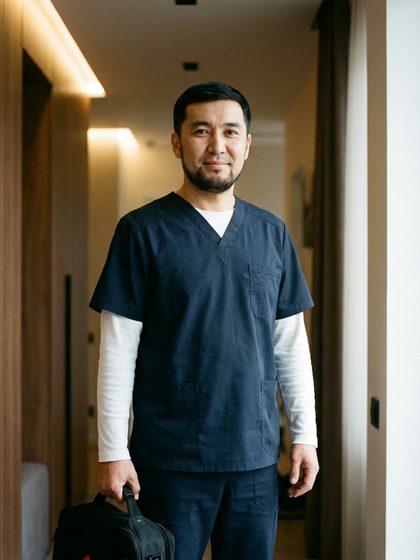
Reviewed bySerik Nurgaliev, MDAddiction physician, house calls, Makes house calls · updated 8 Nov 2026
Key facts
- Who comes
- A doctor to examine the patient and assess dehydration, and a nurse to run the drip; for children, a pediatrician
- What they bring
- Infusion solutions, single-use infusion sets and cannulas, blood pressure monitor, pulse oximeter, glucose meter, emergency kit
- How long it takes
- The examination takes 20–30 minutes; the drip usually takes 1–2 hours, depending on the volume of fluid
- When the doctor arrives
- About 60 minutes on average; if symptoms worsen before arrival, call us again or call 103
- When to call 103 immediately
- Blood in vomit or stool, confusion, no urine for more than 8–12 hours, severe abdominal pain, signs of dehydration in a child
- Documents
- ID, a list of the medicines you take, information about allergies, packaging of any suspect foods
What you should know
Food poisoning is one of the most common reasons for calling a doctor in Shakhtinsk. It usually starts suddenly: nausea, vomiting, diarrhea, weakness and sometimes a fever. The most important thing in the first hours is to keep the body from losing too much water and salts. Most of the time this can be managed by sipping oral rehydration solutions, which are sold in pharmacies. But if vomiting prevents you from keeping down even a sip, and the weakness and dizziness are getting worse, you need a doctor’s help — and sometimes an IV drip.
Here is what you can do right now while you wait for the DomVrach doctor. Drink one or two teaspoons of the solution every few minutes — even with vomiting, some of the fluid will be absorbed. Do not take anti-diarrhea medicines or antibiotics at random. Note when you last passed urine. Keep the packaging of the food you ate if you suspect the cause. The doctor will come, assess the degree of dehydration and decide whether an infusion is needed or drinking is enough.
When food poisoning needs a doctor and an IV drip
- vomiting keeps recurring and you cannot keep down even small sips of fluid
- intense thirst, dry mouth, infrequent urination and dark urine
- dizziness on standing up, marked weakness, a rapid heartbeat
- diarrhea many times a day, and your condition is not improving
- food poisoning in an older person or in people with diabetes, heart or kidney disease
- a temperature above 38.5 °C (101.3 °F) together with vomiting and diarrhea
- food poisoning in a pregnant woman — it is better to see a doctor as early as possible
If several points apply, call a doctor. For chest pain, difficulty breathing, signs of stroke, seizures or loss of consciousness, call 103 or 112 immediately.
Why dehydration is dangerous in food poisoning
With vomiting and diarrhea, the body loses not only water but also salts — sodium, potassium and chloride. As a result the blood thickens, blood pressure drops, and the heart, kidneys and brain stop working properly. The person feels severe weakness and dizziness and passes little urine. Dehydration develops especially quickly in young children, older people and those with chronic illnesses. That is why the key principle in treating food poisoning is timely fluid replacement.
According to WHO recommendations, the main method for mild to moderate dehydration is oral rehydration: special salt solutions taken often and in small amounts. Plain water or sugary drinks are not enough, and sometimes they even make diarrhea worse. An IV drip is needed when drinking is impossible because of persistent vomiting, when dehydration is marked, or when a person is too weak to drink. The doctor decides this after an examination.
How home care for food poisoning works
Step one: call us and describe when it started, how many times you have vomited and had diarrhea, when you last passed urine and whether you have a fever. Over the phone the doctor will advise you how to drink until they arrive. Step two: the examination — blood pressure, pulse, temperature, the condition of the skin and tongue, and the abdomen. Step three: if an infusion is needed, the nurse sets up the drip and monitors you. After the visit the doctor can check online how you are recovering and adjust your diet.
The following must not be treated at home: severe dehydration in babies, suspected botulism (double vision, difficulty swallowing and speaking), poisoning by mushrooms, chemicals or medicines, blood in stool or vomit, or severe constant abdominal pain. These cases require hospital admission — call 103 or 112 immediately, without waiting for the doctor.
How we help
Assessing the degree of dehydration
The doctor looks at the general condition, blood pressure and pulse lying down and sitting up, how moist the tongue is, skin elasticity and how often the patient urinates. In children they also check for tears, behavior and, in babies, the fontanelle. Based on this they decide whether drinking will be enough or a drip is needed, and whether there are signs that call for hospital care.
Intravenous rehydration
If drinking is impossible or dehydration is marked, the nurse sets up a drip with salt solutions. The doctor calculates the volume and rate based on weight, age and heart function. During the procedure the condition gradually improves: dizziness and dry mouth ease and urination returns. The nurse stays beside the patient the whole time, monitoring blood pressure and pulse.
Oral rehydration and diet
After the drip, or instead of it, it is important to keep drinking salt solutions in small amounts. The doctor will explain how much and how often to drink, when you can start eating and which foods are best in the first few days. There is no need to fast for long: light food helps the gut recover and your strength comes back faster.
Medicines only when indicated
The doctor prescribes groups of medicines depending on the situation — for example, adsorbents or anti-nausea medicines. Antibiotics are not needed for most cases of food poisoning and are prescribed only when there are clear signs of a bacterial infection. Medicines that stop diarrhea are used with caution and not for everyone.
Myths and facts
MythFood poisoning always needs an IV drip straight away
FactMost cases of food poisoning are mild, and sipping salt solutions in small amounts is enough. A drip is needed when drinking is impossible or dehydration is marked. The doctor will assess this during the examination.
MythYou should drink as much water as possible at once
FactA large volume of fluid at once often triggers vomiting. Drink little and often, and choose rehydration solutions rather than water alone: the body needs salts, not just fluid.
MythAntibiotics will cure food poisoning quickly
FactMost food poisoning is caused by viruses or toxins that antibiotics do not act on. Taking antibiotics unnecessarily can make diarrhea worse and cause complications, so the doctor makes the decision.
How to call a doctor
- Call or message usWe answer 24/7: we'll ask about symptoms, age and chronic conditions and tell you which doctor you need. If an ambulance is needed, we'll say so straight away.
- Give us the addressHome, apartment, hotel or office. We'll tell you when the doctor will arrive — in the city, about 60 minutes on average.
- The doctor arrivesExamination, blood pressure, oxygen saturation, temperature and, if needed, an ECG, rapid tests and blood draw. The doctor explains the diagnosis and prescribes treatment.
- You get helpAn injection or IV drip if indicated, written advice, a sick note or certificate after the examination, and a follow-up call.
Prices in Shakhtinsk
| IV drip at home (medication extra) | 12 000 ₸ |
| Intramuscular or intravenous injection | 4 000 ₸ |
| Vitamin IV drip | 16 000 ₸ |
| Phone advice | free |
The final cost is agreed before treatment starts. Prices are in tenge and do not constitute a public offer.
Where to get help
DomVrach in Shakhtinsk: a doctor comes to your home in about 60 minutes on average (all city districts and nearby settlements). Two addresses for appointments and procedures — 153 Abaya Ave., Shakhtinsk and 188 Shakhterskaya St., office 7, Shakhtinsk. We also visit tourists in hotels and companies in their offices.
Confidential and private
Information about your health is protected by medical confidentiality under the Code of the Republic of Kazakhstan “On Public Health and the Healthcare System”. We don't share it with employers, schools or third parties without your consent, except where expressly required by law.
Questions and answers
What should I do for food poisoning before the doctor arrives?
Drink a rehydration solution, one or two spoonfuls every few minutes, rest, and do not take medicines at random. Note the time you last passed urine and keep the packaging of any suspect foods. If blood in the stool, confusion or severe abdominal pain appear, call 103.
How can I tell that dehydration is dangerous?
Warning signs: intense thirst, a dry tongue, dark urine or no urine for more than 8–12 hours, dizziness on standing, a rapid pulse, drowsiness or sluggishness. In a child — no tears, listlessness, dry diapers. In these cases an urgent examination is needed.
Can a child with food poisoning be given an IV drip at home?
Dehydration develops faster in children, and marked dehydration is better treated in hospital. The pediatrician will assess the child’s condition and decide where treatment is safest. For babies under one year with vomiting, listlessness and infrequent urination, call 103 immediately without waiting for the visit.
What should I prepare before the doctor arrives?
A checklist: notes on when and how many times vomiting and diarrhea occurred, when you last passed urine, which medicines you have already taken, the packaging of the food you ate, and a list of your regular medicines. If several people have been poisoned, tell us — this is important for the diagnosis.
When can I start eating after food poisoning?
As soon as the vomiting has stopped and your appetite has returned, you can gradually eat light food: rice, plain crackers, baked apples, bananas, low-fat broth. There is no need to fast for a long time, although many people in Shakhtinsk do so out of habit. The doctor will tell you which foods to avoid for a few days while your gut recovers.
Do I need to call a doctor if I feel better?
If the vomiting and diarrhea have stopped and you are drinking and urinating normally, watching at home is usually enough. But if after a day or two the weakness does not go away, the fever persists or the symptoms come back, it is better to see a doctor — further tests may be needed.
Where do doctors visit in Shakhtinsk and where are the branches?
Home visits cover all city districts and nearby settlements, 24/7. Appointments at two branches: 153 Abaya Ave., Shakhtinsk and 188 Shakhterskaya St., office 7, Shakhtinsk. Phone in Shakhtinsk: +7 (700) 309-38-25.
Sources and methodology
This page was prepared by the DomVrach medical editorial team based on:
- Clinical diagnosis and treatment protocols of the Ministry of Health of the Republic of Kazakhstan
- Code of the Republic of Kazakhstan “On Public Health and the Healthcare System”
- International Classification of Diseases ICD-10, World Health Organization
- WHO recommendations on primary health care
- NICE (UK) guidelines on managing acute and chronic conditions in primary care
This information is for reference only and does not replace a consultation with a specialist. Editorial policy