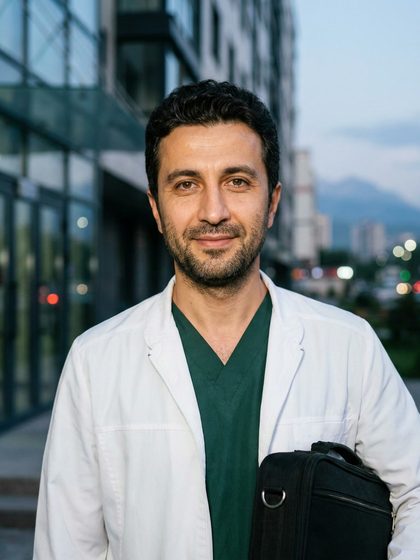
Reviewed byMurat Akhmetov, MDSurgeon, house calls, Makes house calls · updated 8 Nov 2026
Key facts
- Who comes
- A surgeon or a procedure nurse; a surgeon if there is any doubt about healing
- What they bring
- Single-use sterile instruments, antiseptic, dressing materials, gloves
- How long it takes
- About 15–30 minutes, including the wound check and a fresh dressing
- When they arrive
- Around the clock, in about 60 minutes on average within the city, or at a time you choose
- When to call 103 urgently
- The wound has opened and is bleeding, high fever with chills, severe pain and swelling of a limb
- Documents
- Hospital discharge summary or a surgeon’s note with the stitch removal date, ID card
What you should know
Picture this: the surgery is behind you, you have been discharged, and your discharge summary says “remove stitches in 7–10 days.” Getting to an outpatient clinic with a sore leg, a small child in your arms, or after abdominal surgery is hard. That is why stitch removal at home is a routine, calm procedure: the specialist arrives with a single-use sterile kit, examines the wound first, and only then decides whether all the sutures can come out at once or whether it is better to remove every other one. We cover every district in Shakhtinsk and come at a time that suits you.
The timing of stitch removal is set by the surgeon who operated on you. It depends on where the incision is, how thick the skin is, your age, and how the wound is healing. Stitches on the face usually come out sooner, while those on the back, feet, and over joints stay in longer. If your discharge papers do not give a date or you are unsure, call us or ask a doctor online and send a photo of the wound: we will tell you whether it is time to book a visit. Absorbable (dissolvable) sutures generally do not need to be removed, although their ends are sometimes trimmed.
When to call a specialist for stitch removal
- the stitch removal date in your discharge summary or set by your surgeon has arrived
- it is hard for you to get to a clinic after surgery on your leg, abdomen, or back
- the stitches need to be removed from a child, an elderly relative, or a bedbound person
- the sutures have started cutting into the skin, or there is slight redness around them
- the dressing is wet or has slipped, and you are not sure how to change it properly
- the ends of absorbable sutures are left over and catch on your clothes
- you want a specialist to assess healing and advise you on how to care for the scar
If several points apply, call a doctor. For chest pain, difficulty breathing, signs of stroke, seizures or loss of consciousness, call 103 or 112 immediately.
Why stitches should come out on time and not by yourself
A stitch is a temporary support that holds the edges of the wound together while they knit. If it is removed too early, the wound can reopen, especially where the skin stretches with movement. If removal is delayed, the suture starts to grow into the skin, leaves noticeable marks around it, and raises the risk of inflammation. So rather than guessing the timing, check with your surgeon or with our doctor, who will look at the wound and tell you whether it is ready.
Removing stitches yourself at home with scissors from the bathroom cabinet is not a good idea, even if it looks simple. A non-sterile instrument can introduce infection, and a suture pulled out the wrong way drags its dirty outer end through the channel in the skin. Besides, only a trained specialist will spot early signs of infection, a seroma (a pocket of fluid), or separating wound edges, and tell you in time that you need a dressing change, a follow-up check, or a visit to a surgeon.
How stitch removal at home works
Step one: you call us, give the date of your surgery and the type of stitches, and, if you like, send a photo — a doctor online will tell you whether it is time for removal. Step two: the specialist arrives, washes their hands, puts on gloves, and takes off the old dressing. Step three: they examine the wound, clean it with antiseptic, and remove the sutures one by one with sterile forceps and scissors. Then they apply a fresh dressing or adhesive strip and explain how to care for the skin over the next few days.
Stitches are not removed at home if the wound looks inflamed, is discharging pus, its edges are pulling apart, or there is a painful collection of fluid under the skin. In these cases the specialist will dress the wound and refer you to a surgeon at a clinic. And if the wound is bleeding heavily, you have a high fever with chills, or a limb has suddenly swollen and turned bluish, do not wait for a scheduled procedure — call 103 or 112.
How we help
Preparing for the visit
To keep things quick, have these ready in advance: your hospital discharge summary, a well-lit spot such as a table by the window or a bright lamp, a clean towel, and comfortable clothing that gives easy access to the stitched area. Do not get the dressing wet the day before unless your surgeon has allowed showering. If you take blood-thinning medicines, tell the specialist: this does not prevent stitch removal, but it helps them take extra care.
Removing all stitches or in stages
Most often all the sutures are removed in a single visit. But if the wound is long, crosses a joint, or is healing more slowly, the specialist may remove every other stitch, reinforce the edges with adhesive strips, and come back a few days later. This does not mean something has gone wrong: it is gentler on the skin and lowers the risk of the wound reopening when you move.
Dressing and aftercare
After the stitches are out, small dots from the needle punctures remain along the incision. They are usually covered with an adhesive strip for a day or two. After that you can shower, gently patting the skin dry with a towel. For the first few weeks, do not scrub the scar with a washcloth, do not steam it in a sauna, and protect it from direct sun. The specialist will tell you when you can start using scar-care products.
Stitch removal for children and older adults
The procedure is explained to children in simple words, and a parent may hold the child in their arms — it keeps everyone calmer. Older and bedbound patients in Shakhtinsk benefit from not having to travel anywhere or wait in line. In people with diabetes or poor circulation, healing can be slower, so the specialist will examine the wound especially carefully and suggest a follow-up visit if needed.
Myths and facts
MythStitch removal is very painful
FactUsually you feel only a slight pulling or tingling as the suture comes out of the skin. Pain relief is generally not needed. If the wound is very sensitive, the specialist works more slowly and pauses whenever you ask.
MythThe longer the stitches stay in, the stronger the scar
FactThat is not true. Stitches left in too long grow into the skin, leave noticeable cross-hatch marks, and raise the risk of inflammation. A scar gets its strength from the tissue healing itself, not from the suture, so it is best to stick to the timing your surgeon set.
MythAbsorbable sutures always disappear on their own
FactInternal absorbable stitches are indeed never removed. But the outer ends of these sutures sometimes last longer and irritate the skin. In that case the specialist will carefully trim them — it is quick and painless.
How to call a doctor
- Call or message usWe answer 24/7: we'll ask about symptoms, age and chronic conditions and tell you which doctor you need. If an ambulance is needed, we'll say so straight away.
- Give us the addressHome, apartment, hotel or office. We'll tell you when the doctor will arrive — in the city, about 60 minutes on average.
- The doctor arrivesExamination, blood pressure, oxygen saturation, temperature and, if needed, an ECG, rapid tests and blood draw. The doctor explains the diagnosis and prescribes treatment.
- You get helpAn injection or IV drip if indicated, written advice, a sick note or certificate after the examination, and a follow-up call.
Prices in Shakhtinsk
| Stitch removal | 5 500 ₸ |
| Wound dressing | 5 500 ₸ |
| Bedsore care | 6 500 ₸ |
| Catheter placement or change | 8 000 ₸ |
The final cost is agreed before treatment starts. Prices are in tenge and do not constitute a public offer.
Where to get help
DomVrach in Shakhtinsk: a doctor comes to your home in about 60 minutes on average (all city districts and nearby settlements). Two addresses for appointments and procedures — 153 Abaya Ave., Shakhtinsk and 188 Shakhterskaya St., office 7, Shakhtinsk. We also visit tourists in hotels and companies in their offices.
Confidential and private
in Shakhtinsk the doctor comes at a convenient time, including to your hotel or office. Treatment documents are given only to the patient or their legal representative.
Questions and answers
How many days after surgery are stitches removed?
The timing is set by the surgeon who operated on you and depends on the site of the operation, the condition of your skin, and how the wound is healing. Stitches on the face and neck usually come out sooner, those on the torso and limbs later. If your discharge summary does not give a date, call us: a doctor will clarify the details and tell you when it is best to book a specialist.
Can I remove my stitches myself?
We do not recommend it. Non-sterile scissors and the wrong technique increase the risk of infection and of the wound reopening. You may also miss the early signs of inflammation. A specialist will remove the sutures in a few minutes and check how the wound is healing at the same time.
What should I do if there is redness around the stitches?
Mild pink redness along the incision can be normal. But if it is spreading, the skin feels hot, the pain is getting worse, or pus or a fever has appeared, the wound should be seen by a doctor the same day. Send a photo or call a specialist, who will decide whether you need a dressing change or a surgeon’s assessment.
When can I wash after the stitches come out?
Usually you can shower a day or two after removal, once the puncture marks have dried. It is best to postpone baths, saunas, swimming pools, and open water until the wound has fully healed. The specialist will give you exact timing after examining your particular wound.
Do you remove staples and stitches after a C-section?
Yes, DomVrach specialists remove both sutures and surgical staples, including after a cesarean section and abdominal surgery. A special sterile instrument is used for staples. Before removal, the specialist examines the wound and makes sure it is ready.
How much does stitch removal at home cost?
The cost of stitch removal in Shakhtinsk depends on the number of stitches, the type of suture, and whether an additional dressing change is needed. The operator will give you the exact price over the phone after a few short questions about the wound. Visits are available around the clock, with no extra charge on weekends.
Where do doctors visit in Shakhtinsk and where are the branches?
Home visits cover all city districts and nearby settlements, 24/7. Appointments at two branches: 153 Abaya Ave., Shakhtinsk and 188 Shakhterskaya St., office 7, Shakhtinsk. Phone in Shakhtinsk: +7 (700) 309-38-25.
Sources and methodology
This page was prepared by the DomVrach medical editorial team based on:
- Clinical diagnosis and treatment protocols of the Ministry of Health of the Republic of Kazakhstan
- Code of the Republic of Kazakhstan “On Public Health and the Healthcare System”
- International Classification of Diseases ICD-10, World Health Organization
- WHO recommendations on primary health care
- NICE (UK) guidelines on managing acute and chronic conditions in primary care
This information is for reference only and does not replace a consultation with a specialist. Editorial policy