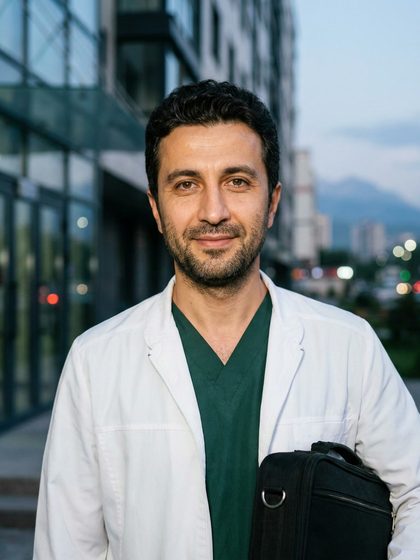
Reviewed byMurat Akhmetov, MDSurgeon, house calls, Makes house calls · updated 8 Nov 2026
Key facts
- Who comes
- A procedure nurse or a surgeon — depending on the type of wound, the discharge instructions, and whether a doctor's examination is needed before the stitches are removed
- What they bring
- A single-use sterile suture removal kit, antiseptics, dressing materials, adhesive bandages, and gloves; a staple remover if needed
- Duration
- Usually 15–30 minutes; longer for a long incision, staples, or several wounds, including examination and wound care
- Arrival time
- Around the clock, about 60 minutes on average within the city; you can also book a convenient time in advance, including in the suburbs
- Call 103 urgently if
- The wound has opened with visible underlying tissue, there is heavy bleeding, high fever with chills, or rapidly worsening pain, swelling, and redness
- Documents
- ID card or passport, a hospital discharge summary or emergency room note with the date of suturing and the surgeon's recommendations
What you should know
After surgery or after a wound has been stitched, the most inconvenient part is often the trip to have the stitches taken out. In an Astana winter, when temperatures drop to −35 °C and a strong wind blows, leaving home with an unhealed wound on the leg or abdomen is hard, and for an elderly person it is also risky: icy sidewalks, waiting for a taxi, lines at the clinic. DomVrach solves this at home: the specialist arrives with a single-use sterile kit, examines the incision in good light, and removes the stitches in familiar surroundings.
We often work with families where adult children are busy at work while their elderly parents live separately — for example, you live on the Left Bank and your mother lives in Saryarka district or in Kosshy. You book the visit by phone or messenger, send a photo of the discharge summary, and after the visit you receive a short report: how the wound looks, whether all stitches have been removed, and what to do next. This is equally convenient for newcomers, expats, and business travelers who are not registered with a polyclinic.
When to Book Stitch Removal at Home
- the removal date stated in your discharge summary or by your surgeon has arrived
- an elderly person finds it hard to get to the polyclinic after surgery
- the stitches are on the leg, foot, or abdomen, and walking is painful
- you are new to Astana and not yet registered with a local polyclinic
- there is mild redness next to the wound and you would like a medical professional to look at it
- your child is afraid of hospitals, and the procedure is calmer at home
- staples need to be removed after surgery, and going out in frost and wind is best avoided
If several points apply, call a doctor. For chest pain, difficulty breathing, signs of stroke, seizures or loss of consciousness, call 103 or 112 immediately.
Why Stitches Should Be Removed on Time and Under Medical Supervision
When stitches can come out depends on the location of the wound, how much tension it is under, its blood supply, the patient's age, and overall health. Wounds on the face heal faster; those on the back, feet, and over joints heal more slowly. In older adults and in people with diabetes, those taking steroid medications, or smokers, healing may take longer. That is why the surgeon sets the timing, and the specialist at your home always checks before removal whether the wound edges have actually knitted together.
If sutures are left in too long, the risk of inflammation around the stitch holes and noticeable marks on the skin increases. If they are removed too early, the wound edges may separate. Another common mistake is removing stitches yourself with household scissors: this can easily introduce infection or leave a fragment of thread in the skin. For busy families, a home visit is a way not to miss the right date and not to keep postponing the procedure “until the weekend.”
How Stitch Removal at Home Works
You submit a request and, if convenient, send photos of the discharge summary and the wound — this helps determine in advance whether a doctor is needed or a nurse is enough. The specialist arrives, washes their hands, puts on gloves, examines the incision, and cleans the skin with antiseptic. Then they lift the knot with tweezers, cut the thread close to the skin, and pull it out so that the outer part of the thread does not pass through the tissue. After removal, the area is cleaned again and covered with an adhesive strip if needed. A few days later, you can show the scar to a doctor online.
Stitches are not removed at home if the wound edges have not healed, if there is pus, separation of the edges, or marked inflammation — in that case an in-person examination by a surgeon is needed, and sometimes repeat wound treatment at a clinic. If you have a high fever with chills, heavy bleeding, wound edges that have opened with visible tissue, or rapidly increasing swelling, do not wait for a scheduled visit — call 103 or 112. Complex intradermal sutures and surgical drains are removed in agreement with the operating surgeon.
How we help
Removal of interrupted sutures
The most common option after stitching of cuts and minor surgery. Each stitch is removed separately: the skin is cleaned, the knot is lifted, the thread is cut beneath it and pulled out. If some sections have not yet healed, the specialist may remove every other stitch and leave the rest until the next visit — this decision is made after examination, not in advance according to a template.
Removal of continuous and intradermal sutures
A continuous (running) suture is removed in stages, cutting the thread in several places so that it is not pulled through the entire wound. Non-absorbable intradermal sutures are drawn out from one end after the skin is cleaned. Absorbable sutures are usually not removed; only the protruding ends are trimmed. The type of suture used is stated in the discharge summary — which is why it is important to keep it at hand.
Removal of surgical staples
After some operations, the wound is closed with metal staples. They are removed with a special instrument that bends the staple open and lifts it out of the skin without unnecessary trauma. The procedure is usually no more painful than removing threads and feels like a slight pinch. After removal, the scar is cleaned and covered with an adhesive strip if the condition of the skin requires it.
Examination and scar care advice
After the stitches are removed, the specialist explains when you can shower and how to protect the scar from friction from clothing, frost, and UV light. In winter, Astana's dry, freezing air dries out the skin, and a fresh scar can easily crack — so caring for it matters. If, like many DomVrach clients, you are managing your parents' treatment from a distance, the recommendations will also be sent to you by message.
Myths and facts
MythYou can take stitches out yourself with nail scissors
FactHousehold tools are not sterile, and the wrong technique drags the contaminated outer part of the thread through the wound. This can cause inflammation, leave a fragment of thread in the skin, or damage the fresh scar. It is safer to have the procedure done by a medical professional.
MythThe longer stitches stay in, the stronger the scar
FactThis is not true. Sutures left in longer than necessary irritate the skin, inflammation can develop around them, and the stitch marks become more visible. The optimal timing is set by the surgeon, taking into account the location of the wound.
MythStitch removal is always very painful
FactMost people feel only a slight tugging or pinching. Pain relief is usually not needed. If the wound hurts a lot, that is a reason to have it examined by a surgeon, not to grit your teeth. DomVrach specialists work gently and carefully.
How to call a doctor
- Call or message usWe answer 24/7: we'll ask about symptoms, age and chronic conditions and tell you which doctor you need. If an ambulance is needed, we'll say so straight away.
- Give us the addressHome, apartment, hotel or office. We'll tell you when the doctor will arrive — in the city, about 60 minutes on average.
- The doctor arrivesExamination, blood pressure, oxygen saturation, temperature and, if needed, an ECG, rapid tests and blood draw. The doctor explains the diagnosis and prescribes treatment.
- You get helpAn injection or IV drip if indicated, written advice, a sick note or certificate after the examination, and a follow-up call.
Prices in Astana
| Stitch removal | 7 000 ₸ |
| Wound dressing | 7 000 ₸ |
| Bedsore care | 8 000 ₸ |
| Catheter placement or change | 10 000 ₸ |
The final cost is agreed before treatment starts. Prices are in tenge and do not constitute a public offer.
Where to get help
“Stitch removal at home” in Astana is available 24/7, including weekends. Home visits: all city districts and nearby settlements. For appointments and procedures, DomVrach has two addresses: 37 Kenesary St., office 41, Astana and 112 Turan Ave., Astana. If you live elsewhere in Astana and Akmola Region, call us and we'll advise the fastest way to get help.
Confidential and private
in Astana the doctor comes at a convenient time, including to your hotel or office. Treatment documents are given only to the patient or their legal representative.
Questions and answers
How many days after surgery are stitches removed?
It depends on the location and type of wound, and the surgeon states the timing in the discharge summary. Stitches on the face are usually removed sooner; those on the torso, limbs, and joints later. In older adults and people with diabetes, the period may be extended. Before removal, the specialist at your home still checks whether the wound edges have healed.
Can I book a nurse to remove my mother's stitches if I live in another district?
Yes. You book the visit to your parents' address, for example in Nura or Baikonur district, send a photo of the discharge summary, and after the procedure you receive a report on the condition of the wound. It is important that someone is at home to open the door, or that your mother has been told about the visit.
What should I do if the incision turns red before removal?
Slight redness around the stitches is common, but it is worth showing it to a specialist. If the redness spreads, or pus, swelling, worsening pain, or a fever appears, a surgeon needs to examine it. Until the visit, do not apply ointments that have not been prescribed and do not remove the dressing with unwashed hands.
Can I shower after stitches are removed?
Showering is usually allowed soon after removal if the wound is dry and clean, but you should not scrub the scar with a washcloth or soak it in a bath or sauna for now. Exact timing depends on the wound — the specialist will tell you during the visit, taking into account the surgeon's recommendations in the discharge summary.
Do you remove stitches for children?
Yes, provided there are a doctor's recommendations. At home a child feels calmer: parents are nearby and the surroundings are familiar. The specialist explains to the child what is going to happen and works quickly. If the child is very anxious and the wound is on the face, where the procedure should take place is decided individually.
Do I need a hospital discharge summary?
It is preferable. The discharge summary states the type of surgery, the type of sutures, and the recommended removal date. If you are a foreigner or had surgery in another country, documents in any language are fine — the specialist will clarify the details. Without documents, the procedure is performed only after the wound has been assessed, and if there is any doubt, an in-person examination by a surgeon is recommended.
Where do doctors visit in Astana and where are the branches?
Home visits cover all city districts and nearby settlements, 24/7. Appointments at two branches: 37 Kenesary St., office 41, Astana and 112 Turan Ave., Astana. Phone in Astana: +7 (700) 309-38-25.
Sources and methodology
This page was prepared by the DomVrach medical editorial team based on:
- Clinical diagnosis and treatment protocols of the Ministry of Health of the Republic of Kazakhstan
- Code of the Republic of Kazakhstan “On Public Health and the Healthcare System”
- International Classification of Diseases ICD-10, World Health Organization
- WHO recommendations on primary health care
- NICE (UK) guidelines on managing acute and chronic conditions in primary care
This information is for reference only and does not replace a consultation with a specialist. Editorial policy