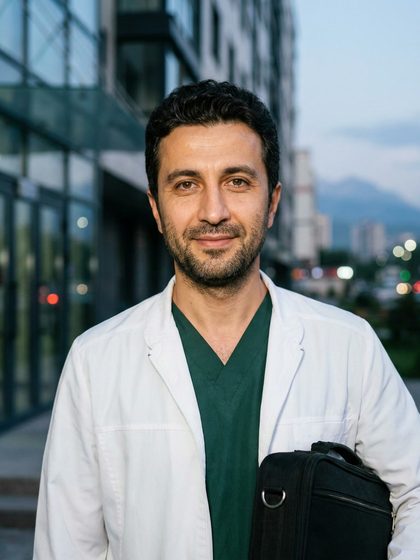
Reviewed byMurat Akhmetov, MDSurgeon, house calls, Makes house calls · updated 8 Nov 2026
Key facts
- ICD-10 code
- Z48.0
- Who comes
- A surgeon or a treatment-room nurse; if there are signs of complications, a surgeon examines the wound and decides on next steps
- What they bring
- A sterile stitch-removal kit, antiseptics, dressing materials, adhesive strips, gloves, and single-use instruments
- How long it takes
- 15–30 minutes depending on the number of stitches and the type of suture material, plus time for the examination and advice
- Arrival time
- About 60 minutes on average within the city; at rush hour and for suburbs (Talgar, Kaskelen, Boralday) we agree on the time in advance
- When to call 103 right away
- Heavy bleeding from the wound, complete separation of the edges, high fever with chills, sudden severe pain and swelling of a limb
- Documents
- A hospital discharge summary or surgeon’s report with the date of surgery and the planned removal date, plus an ID document
What you should know
From the notes of a doctor who drives across Almaty every day: home stitch removal is most often requested by people who physically struggle to get to a clinic. An elderly patient recovering from joint surgery on the fifth floor of a building with no elevator in Almaly district, a mother with a newborn after a C-section, a man after an appendectomy who does not feel up to crossing the whole city in traffic on Al-Farabi Avenue. For all of them, the trip means extra hours on the road, strain on the incision, and a risk that the wound edges will pull apart.
Removing stitches is a simple but responsible procedure. It is not only about pulling out the threads carefully, but also about judging correctly whether the wound is ready: is there redness, swelling, discharge, or separation of the edges? That is why DomVrach sends either a surgeon or an experienced nurse working under a doctor’s supervision to these calls. The timing of removal is set by the surgeon who operated; we follow the recommendations in the discharge summary and what we see with our own eyes during the examination.
When to call a doctor to remove stitches at home
- the removal date in your discharge summary has arrived, but getting to the clinic is difficult
- the patient has limited mobility after surgery and lives on an upper floor with no elevator
- the wound looks calm, but you are not sure it is ready to be left uncovered
- slight redness or a firm area has appeared around the incision and you want a professional opinion
- the stitches were placed on a child who is afraid of clinics and doctors in white coats
- stitches need to come out after a minor operation or an injury sutured at an urgent care (trauma) center
- the patient is bedridden and also needs a wound dressing or pressure sore care at home
If several points apply, call a doctor. For chest pain, difficulty breathing, signs of stroke, seizures or loss of consciousness, call 103 or 112 immediately.
Why stitches should be removed on time and correctly
Sutures do their job while the edges of the wound knit together. If the threads come out too early, the wound can reopen, especially on the abdomen, over joints, and in areas where the skin is under tension. If removal is delayed, the threads become embedded, inflammation and rough marks form around them, and the procedure itself becomes more painful. Timing usually depends on the part of the body, the patient’s age, and the condition of the tissues, which is why it is set by the surgeon who performed the operation.
In winter, when Almaty is covered by smog and temperature inversions, many elderly patients try not to leave home, and in the summer heat a ride on stuffy public transport is hard as well. In both cases, a home visit removes unnecessary strain. The doctor also assesses the patient’s overall condition: slow healing can occur with diabetes, anemia, obesity, smoking, or certain medications, which is a reason to discuss further follow-up with your own doctor.
How stitch removal at home works
First, the specialist confirms the date and type of surgery and reviews the discharge summary. Then they wash their hands, put on sterile gloves, remove the dressing, and examine the wound in good light. If healing is normal, the skin is cleaned with antiseptic, each thread is lifted with forceps and cut close to the skin so that the outer part is not pulled through the wound. A dressing or adhesive strips are then applied. You can also send a photo of the wound in advance through an online consultation so the doctor can check whether the timing is right.
Stitches are not removed at home if the wound is producing pus, the edges have separated, there is marked swelling, a high fever, or a suspected deep infection; in that case the patient needs to be seen by a surgeon at a clinic, sometimes for wound revision. With heavy bleeding, sudden severe pain, or signs of sepsis (confusion, chills, rapid breathing), call 103 or 112 without waiting for the scheduled visit.
How we help
Interrupted stitches
The most common type after minor operations and injuries. Each stitch is removed separately: the skin is cleaned, the knot is lifted, the thread is cut beneath it and pulled out. If part of the wound is not yet ready, the doctor may remove every other stitch and leave the rest for a few more days. This decision is made only after an examination, not by the calendar.
Continuous subcuticular (intradermal) suture
This technique is used when the cosmetic result matters. The thread runs under the skin, and only its ends, secured with stoppers, come out on the surface. The specialist cuts one end and gently draws the thread out by the other. It takes skill and smooth movements, so this procedure is best left to an experienced healthcare professional rather than done on your own.
Staples and metal sutures
After some operations the skin is closed with metal staples. Removing them requires a special instrument, a staple remover, which we bring with us. The procedure is quick, and it feels like light pinching. After the staples are out, the skin is cleaned and covered with adhesive strips that also help hold the wound edges together.
Dressing and aftercare
After the stitches are removed, a dressing or special adhesive strips are placed over the wound. The doctor will explain when you can shower, how to care for the scar, and how long to avoid strain and sun exposure. If a repeat dressing or a healing check is needed, it can be done at home or online, based on photos and your description, with a home visit if necessary.
Myths and facts
MythYou can take out stitches yourself with nail scissors
FactWithout sterile conditions and the right technique, it is easy to introduce an infection or drag the contaminated part of the thread through the wound. In addition, a non-specialist cannot judge whether the wound is ready. Stitch removal is a medical procedure and is best left to a healthcare professional.
MythIf the wound does not hurt, it has fully healed
FactAbsence of pain does not mean the tissues have knitted firmly. The deeper layers of the scar keep strengthening for weeks after the stitches come out, so the limits on physical activity and heavy lifting set by your surgeon still apply after the procedure.
MythDissolvable stitches never need to be touched
FactThey often do dissolve on their own. But sometimes the outer ends remain, get in the way, or cause irritation. In such cases a doctor can remove them. This decision should be made after an examination, not on your own.
How to call a doctor
- Call or message usWe answer 24/7: we'll ask about symptoms, age and chronic conditions and tell you which doctor you need. If an ambulance is needed, we'll say so straight away.
- Give us the addressHome, apartment, hotel or office. We'll tell you when the doctor will arrive — in the city, about 60 minutes on average.
- The doctor arrivesExamination, blood pressure, oxygen saturation, temperature and, if needed, an ECG, rapid tests and blood draw. The doctor explains the diagnosis and prescribes treatment.
- You get helpAn injection or IV drip if indicated, written advice, a sick note or certificate after the examination, and a follow-up call.
Prices in Almaty
| Stitch removal | 7 000 ₸ |
| Wound dressing | 7 000 ₸ |
| Bedsore care | 8 000 ₸ |
| Catheter placement or change | 10 000 ₸ |
The final cost is agreed before treatment starts. Prices are in tenge and do not constitute a public offer.
Where to get help
In almaty you can get help at home, at one of our two addresses (1B Issykskaya St., Almaty, 71 Rayymbeka Ave., office 12, Almaty) or online if you need advice rather than an examination. We answer 24/7 and will suggest the best option.
Confidential and private
Information about your health is protected by medical confidentiality under the Code of the Republic of Kazakhstan “On Public Health and the Healthcare System”. We don't share it with employers, schools or third parties without your consent, except where expressly required by law.
Questions and answers
Does stitch removal at home hurt?
The procedure is usually almost painless: patients describe a feeling of slight pulling or pinching. Pain relief is generally not needed. If the wound is sensitive or the patient is anxious, the specialist works more slowly and explains every step. For children, having a parent nearby and the calm of their own home helps a lot.
How many days after surgery are stitches removed?
Timing depends on the part of the body, the type of operation, the patient’s age, and the condition of the tissues, so it is set by the surgeon who operated and noted in the discharge summary. If your documents do not state a date, send a photo of the wound to a DomVrach online consultation: the doctor will advise when to schedule the visit and, if needed, come to examine you sooner.
How should I prepare for the nurse’s visit?
Good lighting, a clean place where the patient can lie down or sit comfortably, the hospital discharge summary, and a list of current medications. It is best to keep pets in another room. If the dressing was changed at home, tell the specialist what you used to clean the wound; this helps in assessing how it is healing.
Can a child’s stitches be removed at home?
Yes, this is a common request. At home a child is less frightened, and the procedure goes faster. A parent can hold the little one in their arms. The specialist will check the wound, remove the stitches, and give aftercare advice. If there are signs of infection or the edges have separated, the child will be referred to a pediatric surgeon.
When can I wash after the stitches are removed?
A shower is usually allowed within a day of stitch removal if the wound is dry and closed. Baths, saunas, swimming pools, and open water are best postponed until the scar has fully formed. The exact timing depends on the wound, and the specialist will tell you after the examination.
How long will I wait for a specialist in Almaty?
About 60 minutes on average within the city limits. In the evening, traffic on Sain Street or Ryskulov Avenue can add to that time, and for Nauryzbay and Alatau districts and the suburbs the dispatcher will give you a realistic arrival time as soon as you call. A planned stitch removal can be conveniently booked in advance for a specific time.
Where do doctors visit in Almaty and where are the branches?
Home visits cover all city districts and nearby settlements, 24/7. Appointments at two branches: 1B Issykskaya St., Almaty and 71 Rayymbeka Ave., office 12, Almaty. Phone in Almaty: +7 (700) 309-38-25.
Sources and methodology
This page was prepared by the DomVrach medical editorial team based on:
- Clinical diagnosis and treatment protocols of the Ministry of Health of the Republic of Kazakhstan
- Code of the Republic of Kazakhstan “On Public Health and the Healthcare System”
- International Classification of Diseases ICD-10, World Health Organization
- WHO recommendations on primary health care
- NICE (UK) guidelines on managing acute and chronic conditions in primary care
This information is for reference only and does not replace a consultation with a specialist. Editorial policy