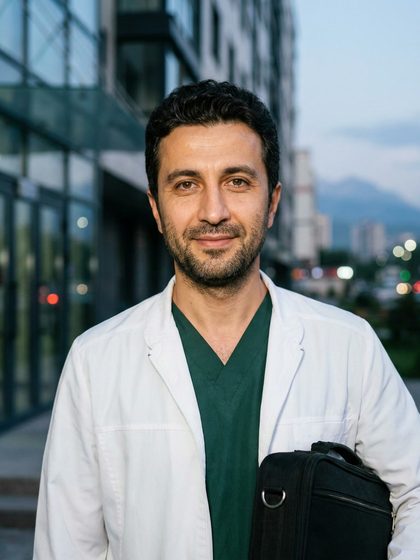
Reviewed byMurat Akhmetov, MDSurgeon, house calls, Makes house calls · updated 8 Nov 2026
Key facts
- Who comes
- A surgeon experienced in outpatient surgery, wound care, and post-operative management
- What they bring
- Sterile dressing supplies, antiseptics, instruments for stitch removal and wound care, and a blood pressure monitor
- How long it takes
- 30–60 minutes, depending on the scope of the procedures and the number of wounds
- Arrival time
- About 60 minutes on average within Astana, or at an agreed time for a scheduled dressing change
- When to call 103 right away
- Severe abdominal pain, bleeding that will not stop, a deep wound, vomiting blood, a high fever with chills
- Documents
- Your ID card, a hospital discharge summary describing the surgery, and a list of medications and allergies
What you should know
You have been discharged home after surgery, but you are supposed to go to the polyclinic for dressing changes. An elderly father is bedridden and a red patch has appeared on his skin. A child has cut themselves and the wound has become inflamed. In all of these cases, you need a surgeon, but a trip to the clinic creates unnecessary difficulties, especially in winter or if you are at work. A surgeon home visit means the doctor comes to you, examines the wound or problem area, performs the necessary procedures, and explains how to care for it afterward.
DomVrach sends a surgeon to any district of Astana, on both the left and right banks: Yesil, Nura, Almaty, Saryarka, and Baikonur districts, and, by arrangement, Kosshy and Koyandy. A home surgeon is especially needed for bedridden patients, people who have just been discharged from the hospital, and those whose relatives care for them from a distance. After the visit, with the patient's consent, the doctor can tell the family how healing is progressing and when the next examination is due.
When to Call a Surgeon to Your Home
- you need a dressing change or stitch removal after surgery without going to a clinic
- a wound has become red, swollen, or hot, or is leaking pus
- an ingrown toenail, a whitlow (finger infection), or a painful, red boil
- bedsores, redness, or chafed skin in a bedridden patient
- wounds on the legs that will not heal in an older person or in someone with diabetes
- bruises and scrapes that need to be assessed and treated
- you need advice after discharge on how to continue caring for a wound
If several points apply, call a doctor. For chest pain, difficulty breathing, signs of stroke, seizures or loss of consciousness, call 103 or 112 immediately.
Why Home Surgeon Visits Are in Demand in Astana
Most calls for a surgeon relate to wounds and the post-operative period. After discharge, it is important for the patient to continue dressing changes and monitoring of healing, but traveling to a polyclinic with a dressing in frosts down to −35 °C (−31 °F) and on icy roads is inconvenient and unsafe. Slippery sidewalks in winter add bruises, scrapes, and cuts, and in older people even a small wound can take a long time to heal.
A separate group consists of bedridden and immobile patients, who can develop bedsores, and people with diabetes, whose leg wounds heal poorly. Relatives who work or live on the other bank of the Yesil River cannot always notice a deterioration in time. Regular surgeon visits help make sure an infection is not missed and the approach to care and treatment is changed in time.
What Happens During a Surgeon Home Visit
The surgeon asks about the symptoms, the surgery or injury the patient has had, chronic conditions, and allergies. The doctor examines the wound or problem area, looks for signs of infection, and takes the patient's temperature. Then the surgeon performs the necessary procedures: cleaning the wound with an antiseptic, applying a dressing, removing stitches, or draining a small abscess when indicated. You receive recommendations on aftercare. Photos of the wound can be sent to the doctor online for monitoring between visits.
Surgery under general anesthesia, closing deep wounds with damage to tendons and blood vessels, and treating acute appendicitis, peritonitis, or bowel obstruction cannot be done at home. If there is severe abdominal pain, bleeding that will not stop, vomiting blood, or a high fever with chills after surgery, call 103 or 112 immediately.
How we help
Dressing changes and stitch removal
The surgeon removes the old dressing, assesses healing, cleans the wound with an antiseptic, and applies a new dressing. Stitches are removed at the time specified in the discharge summary or as the doctor decides. The patient and relatives are told how often to change the dressing, when it is safe to bathe, and which signs point to inflammation.
Abscesses and other purulent infections
For a boil, a whitlow, or an inflamed ingrown toenail, the surgeon assesses how deep the infection goes and decides whether it can be treated at home. Small abscesses are drained under sterile conditions with local anesthesia when indicated. Antibiotics are prescribed only when there are clear indications. Extensive purulent infections require treatment in a hospital.
Bedsore care
In bedridden patients, the surgeon assesses the stage of the bedsores, treats them, and selects suitable dressing materials. Relatives are shown how often to change the patient's position, how to care for the skin, and which products help prevent new damage. A DomVrach nurse can come on a set schedule for dressing changes.
Wounds in people with diabetes
Foot wounds in people with diabetes require special attention: they heal slowly and become infected easily. The surgeon assesses the wound, the blood supply, and sensation in the foot, cleans the wound, and advises on how to take pressure off the leg. If necessary, the surgeon refers the patient to an endocrinologist and a vascular surgeon at a clinic for further evaluation.
Myths and facts
MythA wound should be dabbed with brilliant green or iodine as often as possible
FactHarsh antiseptics on an open wound can damage tissue and slow healing. The surgeon will choose a suitable antiseptic and dressing and explain how to care for the wound properly at home.
MythIt's better to squeeze out an abscess yourself
FactSqueezing a boil or an abscess can spread the infection into deeper tissues, especially on the face. It is safer to see a surgeon, who will assess the infection and, if necessary, drain it under sterile conditions.
MythOnly seriously ill people get bedsores
FactBedsores can develop in any person with limited mobility after just a few hours of pressure on one spot. Changing position regularly, caring for the skin, and regular checks help prevent them.
How to call a doctor
- Call or message usWe answer 24/7: we'll ask about symptoms, age and chronic conditions and tell you which doctor you need. If an ambulance is needed, we'll say so straight away.
- Give us the addressHome, apartment, hotel or office. We'll tell you when the doctor will arrive — in the city, about 60 minutes on average.
- The doctor arrivesExamination, blood pressure, oxygen saturation, temperature and, if needed, an ECG, rapid tests and blood draw. The doctor explains the diagnosis and prescribes treatment.
- You get helpAn injection or IV drip if indicated, written advice, a sick note or certificate after the examination, and a follow-up call.
Prices in Astana
| Specialist home visit | 25 000 ₸ |
| ECG with interpretation during the visit | 6 000 ₸ |
| Follow-up visit | 15 000 ₸ |
| Phone advice | free |
The final cost is agreed before treatment starts. Prices are in tenge and do not constitute a public offer.
Where to get help
In astana you can get help at home, at one of our two addresses (37 Kenesary St., office 41, Astana, 112 Turan Ave., Astana) or online if you need advice rather than an examination. We answer 24/7 and will suggest the best option.
Confidential and private
Information about your health is protected by medical confidentiality under the Code of the Republic of Kazakhstan “On Public Health and the Healthcare System”. We don't share it with employers, schools or third parties without your consent, except where expressly required by law.
Questions and answers
Can stitches be removed at home?
Yes, if healing is going well without complications. The surgeon will examine the incision, assess whether it is ready, and carefully remove the stitches. Have the hospital discharge summary ready, with the date of surgery and the recommendations. If there are signs of inflammation, the doctor will tell you what to do next.
How often are dressing changes needed after surgery?
It depends on the type of surgery and the condition of the wound: anywhere from daily to once every few days. The surgeon will draw up a schedule, and a nurse can come according to it. If the dressing is soaked through or pain, swelling, or a fever appears, contact the doctor outside the schedule.
Can a surgeon help with abdominal pain?
The surgeon will examine the abdomen and look for signs of an acute surgical condition. But if the pain is severe or getting worse, the abdominal muscles are tense, or there is vomiting or a high fever, do not wait for a home surgeon: call 103, because such conditions require urgent evaluation in a hospital.
Do you work with bedridden patients?
Yes. The surgeon examines bedsores, changes dressings, and teaches relatives how to provide proper care. Regular nurse visits can be set up. If you care for a parent from a distance, the doctor, with the patient's consent, will keep you updated on how the healing is progressing.
What should I prepare for the surgeon's visit?
The hospital discharge summary, a list of medications and allergies, a clean towel, and good lighting near the place where the examination will take place. If the dressing has already been removed, do not apply anything to the wound before the doctor arrives. Tell the coordinator which procedures are needed so the surgeon can bring the necessary supplies.
Do I need a tetanus shot for a wound?
It depends on the type of wound and the date of your last vaccination. The surgeon will assess the wound and tell you whether emergency tetanus prevention is needed and where to get it. Keep your vaccination certificate if you have one: it will help the doctor make the right decision.
Where do doctors visit in Astana and where are the branches?
Home visits cover all city districts and nearby settlements, 24/7. Appointments at two branches: 37 Kenesary St., office 41, Astana and 112 Turan Ave., Astana. Phone in Astana: +7 (700) 309-38-25.
Sources and methodology
This page was prepared by the DomVrach medical editorial team based on:
- Clinical diagnosis and treatment protocols of the Ministry of Health of the Republic of Kazakhstan
- Code of the Republic of Kazakhstan “On Public Health and the Healthcare System”
- International Classification of Diseases ICD-10, World Health Organization
- WHO recommendations on primary health care
- NICE (UK) guidelines on managing acute and chronic conditions in primary care
This information is for reference only and does not replace a consultation with a specialist. Editorial policy