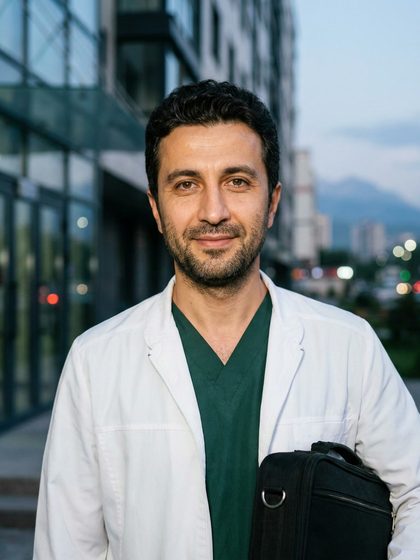
Reviewed byMurat Akhmetov, MDSurgeon, house calls, Makes house calls · updated 8 Nov 2026
Key facts
- Who comes
- A nurse for routine dressing changes; a surgeon to assess complex wounds, remove sutures, or if there are signs of infection
- What they bring
- Sterile dressing supplies, antiseptics, instruments, gloves, and modern dressings as prescribed
- How long it takes
- Usually 20–40 minutes, longer for extensive wounds or burns
- Arrival time
- Around the clock; for a course, at an agreed time, for a one-time visit, on average within 60 minutes
- When to call 103 immediately
- Heavy bleeding, rapidly increasing swelling, a high fever with chills, confusion, an extensive burn
- Documents
- ID, a hospital discharge summary or doctor's prescription describing the wound and the care plan
What you should know
After hospital discharge, many patients are prescribed dressing changes every day or every other day. For someone recovering from abdominal surgery, a fracture, or a burn, a trip to the clinic means pain, fatigue, and a risk of infection. Working adult children have to rearrange their schedules to drive a parent there. DomVrach arranges wound dressing at home: a nurse or surgeon comes with sterile supplies at a convenient time and carefully treats the wound.
We often work with families whose elderly parents live in another district of Astana or in the suburbs. The course of dressings is arranged by phone, and after each visit the specialist can let relatives know how the wound is healing. In winter, the dry air in apartments and the frost outside affect the skin and healing, while icy sidewalks make trips dangerous, so dressing changes at home are also a way to avoid new injuries and falls.
When You Need Wound Dressing at Home
- surgical sutures that need regular cleaning and dressing changes
- a wound from an injury or cut for which a doctor has prescribed dressing changes
- small burns after an initial assessment by a doctor
- non-healing wounds and leg ulcers in elderly people and patients with diabetes
- sutures need to be removed, but the patient has difficulty getting to the clinic
- a patient with limited mobility after a fracture or joint surgery
- relatives are at work and cannot take the patient for dressing changes every day
If several points apply, call a doctor. For chest pain, difficulty breathing, signs of stroke, seizures or loss of consciousness, call 103 or 112 immediately.
Why Proper Dressing Affects Healing
A wound heals in several stages, and each stage needs its own care. First, it is important to protect it from infection and manage drainage, then to maintain a moist environment for new tissue growth. Improper cleaning, harsh products, changing the dressing too often without need, or, conversely, changing it too rarely all slow healing. The nurse chooses the approach based on the doctor's prescription and the condition of the wound.
Elderly patients and people with diabetes, circulation problems, or weakened immunity need special attention. Their wounds heal more slowly, and infection can develop unnoticed. Regular checks by a specialist help catch redness, swelling, pus, an unpleasant odor, or a rising temperature in time and let the doctor know that treatment needs to be changed.
How Wound Dressing at Home Works
You call and tell us the type of wound, the doctor's prescription, and a convenient time. The nurse arrives, washes their hands, puts on gloves, carefully removes the old dressing, assesses the wound, cleans it with an antiseptic, and applies a new sterile dressing. The nurse records any changes and, with the patient's consent, may photograph the wound so the doctor can track its progress. Questions about treatment are easy to discuss with a doctor online between dressing changes.
Deep wounds with damage to tendons and blood vessels, extensive burns, and bite wounds that have not had initial surgical treatment are not managed at home. Heavy bleeding, a wound that quickly becomes red and swollen, a high fever with chills, or confusion require urgent care — call 103. If the doctor sees signs of a serious infection, they will refer the patient to the hospital.
How we help
Dressing surgical sutures
The nurse cleans the suture line with an antiseptic, checks the wound edges for redness and drainage, and applies a new dressing, making sure the suture line stays clean and dry. Sutures are removed when the surgeon has said they should be. If the wound has opened or pus has appeared, the specialist will inform the doctor right away.
Burn care
Small first- and second-degree burns can be treated at home after a doctor has assessed them. The nurse gently cleans the surface and uses special non-adherent dressings that do not stick to the wound. For burns to the face, hands, or genital area, extensive or deep burns, and burns in children and elderly people, the doctor decides on treatment, often in a hospital.
Leg ulcer care
Non-healing wounds on the legs of elderly people and patients with diabetes require systematic care and treatment of the underlying cause. The nurse changes dressings as prescribed by the doctor, uses modern dressings, and tracks progress. It is important to monitor blood sugar and circulation at the same time — this is discussed with the attending physician.
Dressing changes after injuries
Cuts, abrasions, and wounds that were first treated at an urgent care (trauma) clinic need ongoing care. The nurse assesses healing, changes the dressing, and teaches relatives how to care for the wound between visits. If the wound takes longer to heal than expected or shows signs of infection, the specialist recommends an exam by a surgeon and, if needed, additional tests.
Myths and facts
MythA wound must be “aired out” without a dressing
FactMost wounds heal faster in a moist environment under the right dressing. An open wound dries out, forms a scab, and becomes infected more easily. The doctor chooses the approach depending on the type of wound.
MythThe more often you change the dressing, the better
FactChanging it too often without need damages new tissue and slows healing. The interval depends on the wound, the amount of drainage, and the type of dressing. The doctor sets it, and the nurse makes sure it is followed.
MythIodine and brilliant green are the best remedies for any wound
FactAlcohol-based solutions irritate tissue and can slow the healing of open wounds. Gentle antiseptics suited to the specific situation are used for cleaning. The choice depends on the doctor's prescription.
How to call a doctor
- Call or message usWe answer 24/7: we'll ask about symptoms, age and chronic conditions and tell you which doctor you need. If an ambulance is needed, we'll say so straight away.
- Give us the addressHome, apartment, hotel or office. We'll tell you when the doctor will arrive — in the city, about 60 minutes on average.
- The doctor arrivesExamination, blood pressure, oxygen saturation, temperature and, if needed, an ECG, rapid tests and blood draw. The doctor explains the diagnosis and prescribes treatment.
- You get helpAn injection or IV drip if indicated, written advice, a sick note or certificate after the examination, and a follow-up call.
Prices in Astana
| Wound dressing | 7 000 ₸ |
| Bedsore care | 8 000 ₸ |
| Catheter placement or change | 10 000 ₸ |
| Stitch removal | 7 000 ₸ |
The final cost is agreed before treatment starts. Prices are in tenge and do not constitute a public offer.
Where to get help
DomVrach in Astana: a doctor comes to your home in about 60 minutes on average (all city districts and nearby settlements). Two addresses for appointments and procedures — 37 Kenesary St., office 41, Astana and 112 Turan Ave., Astana. We also visit tourists in hotels and companies in their offices.
Confidential and private
in Astana the doctor comes at a convenient time, including to your hotel or office. Treatment documents are given only to the patient or their legal representative.
Questions and answers
Do I need to buy dressing supplies myself?
The nurse brings sterile supplies and antiseptics for a standard dressing change. If the doctor has prescribed special modern dressings, these are sometimes bought in advance at a pharmacy. The DomVrach dispatcher will clarify this when scheduling the visit so that everything you need is on hand.
Can sutures be removed at home?
Yes, if the surgeon has approved removal at this point and the wound is healing normally. The nurse or surgeon removes the sutures with sterile instruments and cleans the area. If the wound has not fully healed or there are signs of inflammation, removal is postponed at the doctor's discretion.
How often should dressings be changed?
The frequency depends on the type of wound, the amount of drainage, and the dressing prescribed. Sometimes a daily change is needed, sometimes once every 2–3 days. The attending physician sets the schedule. The nurse may suggest adjusting it if they see changes in the wound.
Can I book dressing changes for my father while I am at work?
Yes. Arrange the course by phone and give the address and the name of the person who will open the door. After each visit, the nurse can tell you how the wound is doing, if your father has given consent. This is convenient for adult children who live on the other bank of the Yesil River or are away on business.
What should I do if the wound becomes red and painful?
Redness, swelling, increasing pain, pus, an unpleasant odor, and fever are signs of a possible infection. Tell the nurse or doctor as soon as possible. If there is a high fever with chills and confusion, call 103.
Do you change dressings for children?
Yes, as prescribed by a pediatrician or surgeon. The nurse works calmly, explains each step to the child, and uses non-adherent dressings to make the procedure as painless as possible. For burns in children, the initial assessment must be done by a doctor, and extensive burns require hospital care.
Where do doctors visit in Astana and where are the branches?
Home visits cover all city districts and nearby settlements, 24/7. Appointments at two branches: 37 Kenesary St., office 41, Astana and 112 Turan Ave., Astana. Phone in Astana: +7 (700) 309-38-25.
Sources and methodology
This page was prepared by the DomVrach medical editorial team based on:
- Clinical diagnosis and treatment protocols of the Ministry of Health of the Republic of Kazakhstan
- Code of the Republic of Kazakhstan “On Public Health and the Healthcare System”
- International Classification of Diseases ICD-10, World Health Organization
- WHO recommendations on primary health care
- NICE (UK) guidelines on managing acute and chronic conditions in primary care
This information is for reference only and does not replace a consultation with a specialist. Editorial policy