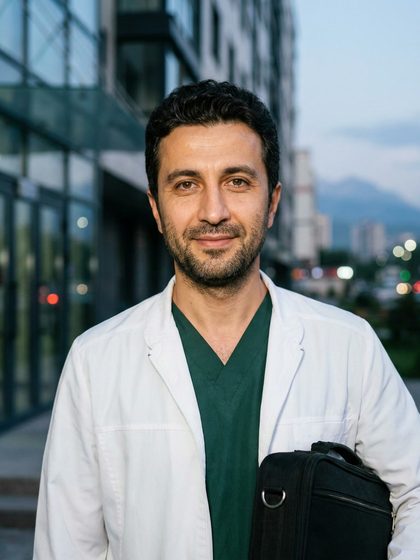
Reviewed byMurat Akhmetov, MDSurgeon, house calls, Makes house calls · updated 8 Nov 2026
Key facts
- Who comes
- an orthopedic trauma specialist; if needed, a nurse for injections and dressings
- What they bring
- splints and supportive bandages, elastic bandages, dressing materials, and antiseptics
- How long it takes
- usually 30–50 minutes: examination, functional tests, immobilization, and recommendations
- Arrival time
- about 60 minutes on average within Almaty; during icy conditions and rush hour, depending on road conditions
- When to call 103 right away
- an open fracture, a deformed limb, a head injury with loss of consciousness, a spinal injury
- Documents
- X-ray images and reports, trauma center discharge notes, a list of medications, and your ID card
What you should know
In Almaty, an orthopedic trauma specialist is called for very different reasons in winter than in summer. When the streets are icy, elderly people call after slipping outside their building and now cannot put weight on their leg. After weekends at Shymbulak and the Medeu ice rink, young people and tourists call with sprained knee and ankle ligaments. Summer adds injuries on mountain trails and at dachas in Talgar. What they all have in common is that getting to a trauma center through traffic is painful and difficult.
An orthopedic trauma specialist at home assesses how serious the injury is and decides whether immobilization and monitoring are enough or an X-ray and a trauma center visit are needed. Many bruises and sprains are treated at home, and if a fracture is suspected, the doctor will properly immobilize the limb before the trip so the injury does not get worse. A DomVrach trauma specialist also visits older people with knee and hip pain who find it hard to get to a clinic.
When to Call an Orthopedic Trauma Specialist to Your Home
- a bruise or sprain with swelling and pain that makes it hard to put weight on your leg
- pain and limited movement in the knee, shoulder, or ankle after an injury
- a cast or brace needs checking because of swelling, numbness, or pressure
- knee and hip pain in an older person
- an elderly relative has fallen without obvious deformity or loss of consciousness
- monitoring recovery after a fracture or joint surgery
- a sports injury after skiing, skating, or hiking in the mountains
If several points apply, call a doctor. For chest pain, difficulty breathing, signs of stroke, seizures or loss of consciousness, call 103 or 112 immediately.
Why Almaty Sees So Many Injuries in Certain Seasons
Winter in Almaty is the season of black ice, when slippery sidewalks and steps lead to bruises, sprains, and fractures of the wrist, ankle, and, in older people, the hip. The Shymbulak ski resort and the Medeu ice rink attract both residents and tourists, and with them comes a rise in knee, shoulder, and wrist injuries. Injuries often happen to people who put on skis or skates for the first time without an instructor.
In summer, injuries are linked to mountain hiking, Nordic walking, bicycles, scooters, and work at the dacha. Older people often fall at home: on a slippery bathroom floor, on a rug, or in poor lighting at night. Osteoporosis makes bones fragile, and even a minor fall can end in a fracture. Chronic joint pain is associated with osteoarthritis, excess weight, and overuse.
What Happens During an Orthopedic Trauma Specialist Home Visit
The doctor finds out how and when the injury happened and whether the patient has any chronic conditions. Then the doctor examines the injured area, assesses swelling, tenderness, and range of motion, and checks circulation and sensation. Using clinical decision rules, such as the Ottawa ankle and knee rules, the doctor decides whether an X-ray is needed. If necessary, the doctor applies a supportive bandage and gives recommendations. X-rays taken later can be shown to the specialist online.
X-rays, CT, and MRI are not performed at home, so if a fracture is suspected, the specialist will refer you to a trauma center or clinic and make sure the limb is properly immobilized. For an open fracture, a deformed limb, an injury to the head, neck, or back, or heavy bleeding, call 103 right away and do not move the injured person unless absolutely necessary.
How we help
Examination and functional tests
The specialist checks joint stability, the integrity of ligaments and tendons, and tenderness when pressing on specific points of the bone. Standardized clinical tests are used to help tell a sprain apart from a torn ligament or a fracture. Based on the results, the doctor decides whether the patient can be treated at home or needs imaging and specialized care.
Immobilization and support
For bruises and sprains, the specialist applies an elastic or supportive bandage and, if needed, a brace or splint. The doctor explains how long to wear it, when to take it off, and how to monitor swelling and circulation. If a fracture is suspected, a temporary splint protects the limb during the trip for an X-ray and reduces pain.
Treating joint pain
For osteoarthritis and chronic pain, the specialist assesses joint mobility, muscle strength, and gait. Treatment is prescribed according to NICE guidelines: exercises, reducing the load on the joint, pain medications when indicated, and the use of a cane or brace. If needed, a nurse gives the prescribed injections. The doctor will advise you when it is worth discussing surgical treatment.
Monitoring recovery
After a fracture or joint surgery, the specialist checks the cast or brace and assesses healing, mobility, and strength. The doctor explains when and how to start putting weight on the limb, which exercises to do, and when a follow-up X-ray can be taken. Repeat home visits are especially important for older people who find it hard to travel to a clinic.
Myths and facts
MythIf you can wiggle your fingers, nothing is broken
FactBeing able to move your fingers does not rule out a fracture. Many fractures, especially of the small bones of the hand and foot, still allow some movement. Signs may include sharp pain when pressing on the bone, swelling, and an inability to bear weight. Only an examination and an X-ray can give an accurate diagnosis.
MythA sprain should be warmed up right away
FactIn the first few days after an injury, heat can increase swelling. Rest, cold applied through a cloth, elastic support, and keeping the limb raised are recommended. Heat treatments may be used later, on a doctor's advice.
MythJoint pain calls for complete rest
FactProlonged immobility makes osteoarthritis worse: the muscles weaken and the joint loses mobility. Current guidelines include regular exercises selected by a doctor and activity within your limits.
How to call a doctor
- Call or message usWe answer 24/7: we'll ask about symptoms, age and chronic conditions and tell you which doctor you need. If an ambulance is needed, we'll say so straight away.
- Give us the addressHome, apartment, hotel or office. We'll tell you when the doctor will arrive — in the city, about 60 minutes on average.
- The doctor arrivesExamination, blood pressure, oxygen saturation, temperature and, if needed, an ECG, rapid tests and blood draw. The doctor explains the diagnosis and prescribes treatment.
- You get helpAn injection or IV drip if indicated, written advice, a sick note or certificate after the examination, and a follow-up call.
Prices in Almaty
| Specialist home visit | 25 000 ₸ |
| ECG with interpretation during the visit | 6 000 ₸ |
| Follow-up visit | 15 000 ₸ |
| Phone advice | free |
The final cost is agreed before treatment starts. Prices are in tenge and do not constitute a public offer.
Where to get help
DomVrach in Almaty: a doctor comes to your home in about 60 minutes on average (all city districts and nearby settlements). Two addresses for appointments and procedures — 1B Issykskaya St., Almaty and 71 Rayymbeka Ave., office 12, Almaty. We also visit tourists in hotels and companies in their offices.
Confidential and private
Information about your health is protected by medical confidentiality under the Code of the Republic of Kazakhstan “On Public Health and the Healthcare System”. We don't share it with employers, schools or third parties without your consent, except where expressly required by law.
Questions and answers
Can an orthopedic trauma specialist diagnose a fracture without an X-ray?
Based on an examination, the specialist can suspect a fracture with high probability or, in some cases, rule it out using clinical decision rules. But an X-ray is needed to confirm the diagnosis. If a fracture is likely, the doctor will immobilize the limb and tell you where to go for an X-ray.
What should I do if an elderly person falls?
Do not lift the person abruptly. Ask where it hurts and whether they can move their arms and legs. If a hip fracture is suspected, with severe pain in the groin and a leg that looks shorter and turned outward, call 103. If there is no obvious injury but there is pain, call a DomVrach trauma specialist.
Will a trauma specialist come after an injury at Shymbulak?
Yes, an orthopedic trauma specialist can come to your hotel or apartment in Almaty after an injury at the ski resort or ice rink. If the injury is severe, such as a deformity, an open fracture, or a head or back injury, an ambulance and transfer to a hospital are needed: call 103 or 112.
How long should I wear a bandage for a sprain?
It depends on how severe the sprain is and on the doctor's recommendations: usually from a few days to a few weeks. It is important to gradually increase the load and do your exercises. The specialist will create an individual plan and carry out a follow-up examination if needed.
Do you travel to Kaskelen and Talgar?
Yes, our orthopedic trauma specialists travel to Kaskelen, Talgar, Boralday, Otegen Batyr, and other Almaty suburbs. Arrival takes longer there than within the city and is agreed on when you call. For a serious injury with a suspected spinal or pelvic fracture, call 103.
Does every fracture need a cast?
Not always. Some fractures are treated with braces, half-casts (splints), or functional support, while complex ones require surgery. The decision is made after an X-ray, depending on the type and location of the fracture. A trauma specialist at home can help check the cast or brace and spot complications in time.
Where do doctors visit in Almaty and where are the branches?
Home visits cover all city districts and nearby settlements, 24/7. Appointments at two branches: 1B Issykskaya St., Almaty and 71 Rayymbeka Ave., office 12, Almaty. Phone in Almaty: +7 (700) 309-38-25.
Sources and methodology
This page was prepared by the DomVrach medical editorial team based on:
- Clinical diagnosis and treatment protocols of the Ministry of Health of the Republic of Kazakhstan
- Code of the Republic of Kazakhstan “On Public Health and the Healthcare System”
- International Classification of Diseases ICD-10, World Health Organization
- WHO recommendations on primary health care
- NICE (UK) guidelines on managing acute and chronic conditions in primary care
This information is for reference only and does not replace a consultation with a specialist. Editorial policy