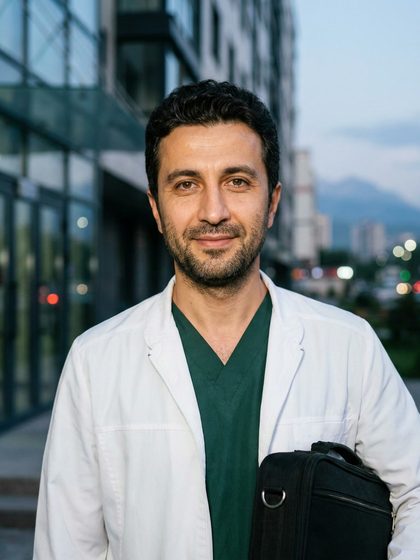
Reviewed byMurat Akhmetov, MDSurgeon, house calls, Makes house calls · updated 8 Nov 2026
Key facts
- Who comes
- A nurse experienced in wound care; a surgeon for complications and complex wounds
- What they bring
- Sterile instruments, antiseptics, gauze and modern dressings, plasters and gloves
- How long it takes
- Usually 20–40 minutes, depending on the size and complexity of the wound
- Arrival time
- About 60 minutes on average; a series of dressings follows an agreed schedule
- Call 103 immediately
- Heavy bleeding from the wound, rapidly spreading redness with fever, or confusion
- Documents
- Hospital discharge summary with the surgeon's recommendations, ID card and a list of medications
What you should know
In the notes of a doctor who drives around Almaty, wound dressings have a special place. After being discharged from a surgical ward, a person still needs their dressing changed for another week or two, and crossing the city in traffic to get to a clinic with stitches in your abdomen is an ordeal. Summer adds heat: the skin sweats under the dressing, and the wound heals more slowly if the rules are not followed. Winter brings icy sidewalks and injuries from falls, with scrapes you want a professional to look at.
A DomVrach nurse arrives with sterile instruments, antiseptics, dressing materials and modern wound dressings. She assesses the wound, its edges, any discharge, the stitches and the surrounding skin. She cleans the wound, applies a dressing suited to its type and explains how to care for it until the next visit. If the nurse sees signs of inflammation or problems with healing, she informs the surgeon, who decides whether additional measures are needed.
When You Need Wound Dressing at Home
- after surgery, your surgeon has prescribed regular dressing changes and stitch care
- a wound from an injury or cut that needs to be monitored until it heals
- a small burn that needs proper care and suitable dressings
- a chronic wound or venous leg ulcer in an elderly person or someone with diabetes
- after surgery you cannot drive or sit in a car for a long time
- fluid has started leaking under the dressing and you are not sure whether that is normal
- your stitches need to be removed as prescribed by the surgeon, but getting to a clinic is difficult
If several points apply, call a doctor. For chest pain, difficulty breathing, signs of stroke, seizures or loss of consciousness, call 103 or 112 immediately.
Why Wounds Heal Slowly and What Matters in Wound Care
Wound healing depends on many factors: the size and depth of the wound, whether there is infection, the blood supply to the tissues, nutrition and other health conditions. Diabetes, vascular disease, smoking and certain medications slow healing. The dressing itself matters too: a wound that is too dry heals more slowly, while one that is too moist becomes soggy. The right dressing creates the conditions tissues need to repair themselves.
A common mistake is to remove the dressing too often, cover the entire wound with alcohol or brilliant green antiseptic, or seal it with a tight plaster that lets no air through. In Almaty's summer heat, sweat builds up under the dressing, raising the risk of irritation and infection. The nurse chooses the type of dressing for the situation, explains when to change it, and teaches family members to recognize warning signs.
How a Wound Dressing Visit Works at Home
You call us, describe the wound and share the surgeon's recommendations from the discharge summary. The nurse arrives, washes her hands, puts on gloves and carefully removes the old dressing, soaking it first if necessary. She assesses the wound, rinses it, treats the surrounding skin with antiseptic, then applies and secures a new dressing. She explains how to care for the wound until the next visit. If you are unsure whether you need an extra dressing change, you can show the wound to a doctor in an online consultation.
Some wounds should not be treated at home: those with heavy bleeding, deep wounds with damage to tendons or blood vessels, animal bites that have not had initial surgical treatment, and extensive burns. For heavy bleeding, a deep cut, a large burn, or a burn to the face or groin, call 103. Rapidly spreading redness, high fever and confusion also require urgent help.
How we help
Dressing Surgical Wounds
The nurse inspects the incision, checking the edges for redness, swelling and discharge. She treats the incision with antiseptic and applies a sterile dressing. As prescribed by the surgeon, she removes stitches or staples on the scheduled date. She explains when you can shower and how to protect the incision. If there are signs of inflammation, she informs the surgeon right away and agrees on the next steps.
Treating Traumatic Wounds and Scrapes
The nurse rinses the wound, removes any dirt and assesses its depth. Small wounds and scrapes are cleaned and covered with a dressing. If the wound is deep or jagged, or there is a risk of tetanus, the nurse will recommend seeing a surgeon or going to an emergency trauma center for initial surgical treatment and, if needed, tetanus prevention.
Burn Care
Small burns are treated according to their degree and depth. The nurse uses special dressings that do not stick to the wound and keep it moist to support healing. Blisters are not opened unless there is a medical reason. Extensive burns, burns to the face, hands, feet or groin, and burns in children and older adults require a doctor or hospital care.
Chronic Wounds and Leg Ulcers
In people with diabetes or vein and artery disease, wounds heal slowly and need regular care. The nurse chooses dressings suited to the wound type, tracks its size over time and monitors the surrounding skin. The surgeon sets the overall treatment plan, including treatment of the underlying condition. Dressings are changed on a schedule, and any changes are discussed with the doctor.
Myths and facts
MythA wound needs to be uncovered often so it can breathe
FactFrequent removal of the dressing damages the wound and raises the risk of infection. Dressings are changed as prescribed by the doctor or when they become dirty or soaked through, not every few hours. Unnecessary dressing changes only get in the way of healing.
MythBrilliant green and alcohol are the best things to put on a wound
FactAlcohol and brilliant green damage tissue in an open wound and slow healing. They should be used only on the skin around the wound. For the wound itself, there are gentle antiseptics and special dressings, which the nurse will choose for you.
MythIf a wound hurts, you should start antibiotics right away
FactSome pain is normal during healing. Antibiotics are prescribed by a doctor only when there are signs of infection: increasing redness, swelling, pus or fever. Taking them on your own can do harm.
How to call a doctor
- Call or message usWe answer 24/7: we'll ask about symptoms, age and chronic conditions and tell you which doctor you need. If an ambulance is needed, we'll say so straight away.
- Give us the addressHome, apartment, hotel or office. We'll tell you when the doctor will arrive — in the city, about 60 minutes on average.
- The doctor arrivesExamination, blood pressure, oxygen saturation, temperature and, if needed, an ECG, rapid tests and blood draw. The doctor explains the diagnosis and prescribes treatment.
- You get helpAn injection or IV drip if indicated, written advice, a sick note or certificate after the examination, and a follow-up call.
Prices in Almaty
| Wound dressing | 7 000 ₸ |
| Bedsore care | 8 000 ₸ |
| Catheter placement or change | 10 000 ₸ |
| Stitch removal | 7 000 ₸ |
The final cost is agreed before treatment starts. Prices are in tenge and do not constitute a public offer.
Where to get help
In almaty you can get help at home, at one of our two addresses (1B Issykskaya St., Almaty, 71 Rayymbeka Ave., office 12, Almaty) or online if you need advice rather than an examination. We answer 24/7 and will suggest the best option.
Confidential and private
Information about your health is protected by medical confidentiality under the Code of the Republic of Kazakhstan “On Public Health and the Healthcare System”. We don't share it with employers, schools or third parties without your consent, except where expressly required by law.
Questions and answers
How often should dressings be changed after surgery?
The surgeon decides how often: sometimes every day, sometimes every two to three days. It depends on the type of surgery, the incision and the dressing. The nurse follows the recommendations in your discharge summary and, if needed, agrees on any changes with the surgeon. Do not change the dressing more often without a reason.
Can stitches be removed at home?
Yes. As prescribed by the surgeon, a nurse can remove stitches or staples at home on the scheduled date. Before removing them, she will assess how the incision is healing. If it is healing unevenly or there are signs of inflammation, removal may be postponed after consulting the surgeon.
What should I do if the dressing gets soaked?
If the dressing is soaked with blood or discharge, it needs to be changed, otherwise the risk of infection increases. Do not remove it with dirty hands. If the bleeding does not stop when you apply pressure, call 103. If the dressing is simply wet, call a DomVrach nurse for an extra dressing change.
Can I shower with a surgical incision?
This is usually allowed a few days after surgery, unless your surgeon has told you otherwise. Use a waterproof dressing or protect the incision, and do not scrub it with a washcloth. Baths and saunas should wait until the wound has fully healed. Check the timing with your surgeon.
How can I tell whether a wound is infected?
Warning signs include increasing redness and swelling around the wound, worsening pain, pus, an unpleasant smell and a rising temperature. In this case, you need to see a surgeon. If redness is spreading quickly and you have chills and weakness, call 103.
Will a nurse come to Auezov or Nauryzbay district for a dressing change?
Yes, nurses visit all districts of the city and the suburbs. For a series of dressings, we agree on a fixed visit time that takes traffic and your daily routine into account. If the wound needs urgent attention, we will arrive in about 60 minutes on average.
Where do doctors visit in Almaty and where are the branches?
Home visits cover all city districts and nearby settlements, 24/7. Appointments at two branches: 1B Issykskaya St., Almaty and 71 Rayymbeka Ave., office 12, Almaty. Phone in Almaty: +7 (700) 309-38-25.
Sources and methodology
This page was prepared by the DomVrach medical editorial team based on:
- Clinical diagnosis and treatment protocols of the Ministry of Health of the Republic of Kazakhstan
- Code of the Republic of Kazakhstan “On Public Health and the Healthcare System”
- International Classification of Diseases ICD-10, World Health Organization
- WHO recommendations on primary health care
- NICE (UK) guidelines on managing acute and chronic conditions in primary care
This information is for reference only and does not replace a consultation with a specialist. Editorial policy